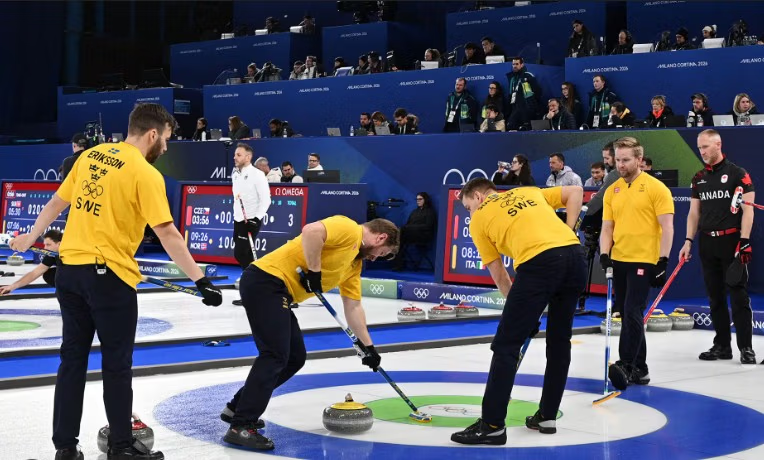
A tense on-ice dispute during a men’s curling match between Canada and Sweden has led to an unexpected rule clarification at the Milan 2026 Winter Olympics, sparking wider conversations about officiating standards in the sport.
The incident unfolded during Friday’s round-robin game when Swedish curler Oskar Eriksson questioned whether Canadian player Marc Kennedy had touched a stone after releasing it, an action prohibited once the stone crosses the hog line. Kennedy denied the allegation, and the disagreement quickly escalated into a heated exchange, prompting officials to issue a verbal warning over inappropriate language.
The moment drew significant attention from teams and organizers alike, raising concerns about how deliveries are monitored and when umpires should intervene during high-stakes Olympic competition.
Previously, officials had been closely observing every delivery to ensure compliance. However, following consultations with participating nations, the governing body of World Curling revised the protocol to ease tensions while maintaining fairness.
Under the updated approach, which came into effect on Sunday, February 15, umpires will now monitor stone deliveries only when a team formally requests observation. The adjustment is intended to balance rule enforcement with athlete trust, reducing the perception of constant scrutiny while still allowing officials to step in when necessary.
The episode has ignited broader discussion within the curling community about sportsmanship, self-regulation, and the role of officiating at the Olympic level, where even minor infractions can carry major consequences.
As competition continues, the situation serves as a reminder that the Olympic spotlight not only tests athletic performance but can also shape how sports evolve in real time.