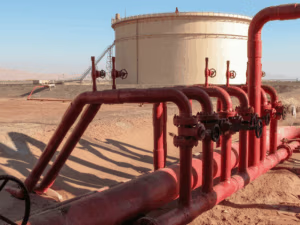

On March 13, the United States carried out a major airstrike on Kharg Island, Iran’s oil hub, targeting military infrastructure surrounding key facilities. U.S. President Donald Trump announced the operation on social media, claiming that all military targets were destroyed while saying that oil infrastructure had so far been spared, but warning that vital facilities could be targeted if Iran continued to threaten maritime shipping.
Kharg Island handles about 90% of Iran’s oil exports, moving an estimated 1.1 to 1.5 million barrels per day of crude. The strike has heightened global concern over disruptions to crude supply amid an ongoing crisis in the Strait of Hormuz, a vital chokepoint through which roughly 20% of the world’s oil and gas flows.
Energy Markets and Shipping Disruption
Iran has been leveraging energy infrastructure and shipping routes as part of its strategic response to military pressure. Attacks and threats against vessels using the Strait of Hormuz—through which roughly one‑fifth of the world’s daily oil exports normally transit—have virtually halted traffic and triggered a dramatic rise in war‑risk insurance costs.
Energy markets have responded with sharp volatility. Oil prices surged past $100 per barrel and remain elevated, reflecting fears that prolonged instability in the Gulf will push global supply tighter. Shipping firms have rerouted tankers, and global freight rates have spiked amid growing risks in key maritime corridors.
Wider Military Escalation
Beyond the Kharg strike and maritime disruptions, the conflict has expanded across the region:
- Missile and drone attacks by Iran continue to target Israeli territory, Gulf states hosting U.S. forces, and American bases in Iraq and Kuwait.
- A U.S. military aircraft crashed in Iraq, killing all crew members, underscoring the danger faced by coalition forces in the theatre.
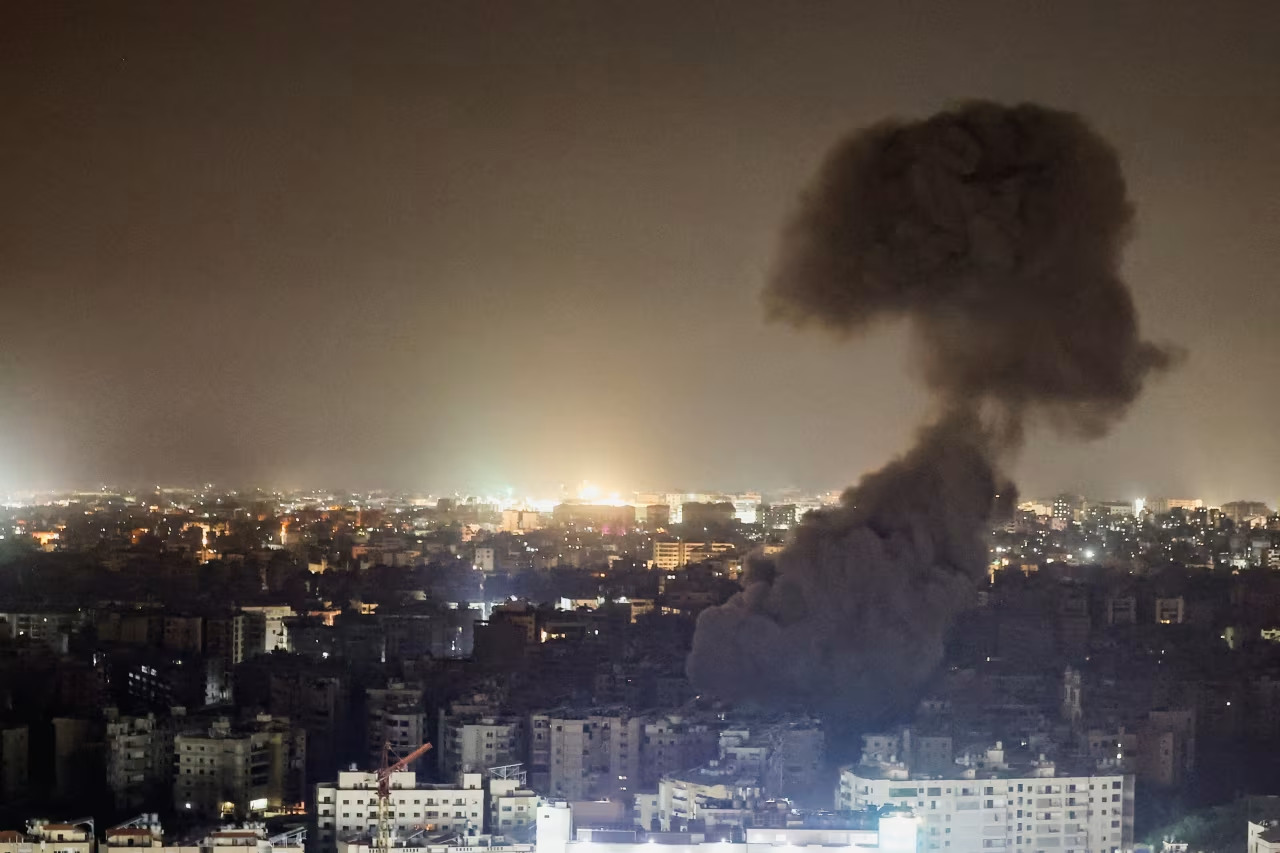
- Hezbollah and other Iran‑aligned groups have carried out strikes in Lebanon and against Israeli positions.
Officials from U.S. and allied militaries have also reported high numbers of interceptions of Iranian missiles and drones, suggesting the intensity of aerial engagements has been sustained over days.
Global Economic and Humanitarian Impact
The disruption at the Strait of Hormuz and the ongoing conflict have sent shockwaves through global markets. Analysts say the closure or near‑closure of the strait could have the largest impact on energy supply since the 1970s, pushing prices higher and contributing to inflationary pressures worldwide.
The broader economic fallout also touches food security and agriculture, as rising fuel, fertilizer and freight costs ripple through supply chains already strained from earlier global disruptions. A recent report warns higher maritime insurance premiums, energy costs and blocked routes could raise food prices and hinder agricultural production across key markets.
International Responses and Diplomatic Strain
World powers remain deeply concerned about the conflict’s expansion, with diplomatic efforts to de‑escalate currently stalled. Gulf Cooperation Council (GCC) states have condemned attacks on their territories and infrastructure, while the United Nations and other international bodies urge caution and humanitarian access amidst rising civilian casualties and displacement.