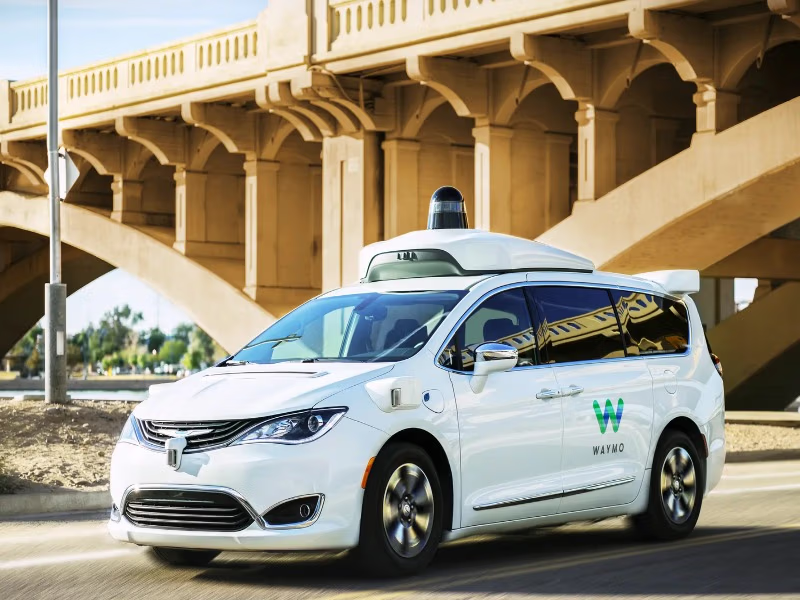
According to a customer notification in the company’s driverless ride-hailing app, Waymo officially shelved its robotaxi operation in the San Francisco Bay Area on Thursday, anticipating imminent storms in the region.
The notification indicated that “Service temporarily paused due to National Weather Service flash flood warning.”
Earlier this week, the Alphabet-owned company announced that it will upgrade its fleet so that its robotaxi service can be more resilient during power outages.
Waymo stopped operations on December 20, in a blackout in San Francisco that left tens of thousands of residents in the region without power, and some of its autonomous vehicles halted in traffic, all of which contributed to or caused gridlock.
The National Weather Service issued a flood watch across the entire San Francisco Bay Area until Friday, 10 p.m. local time. Waymo didn’t respond immediately to a request for comment or indicate whether regulators required its service pause on Thursday, given the flash flood warnings.
The California Public Utilities Commission, which controls driverless ride-hailing services in the state, did not respond to information-seeking inquiries immediately due to the Christmas holiday on Thursday.
Waymo now has five operational, driverless service markets in the U.S. market, compared to three at the conclusion of 2024. Waymo has been deploying the use of its robotaxi in Austin, the San Francisco Bay Area, Phoenix, Atlanta, and Los Angeles this year.
CNBC previously reported that the company has already planned to increase its service territory both within and outside the U.S. by 2026. Waymo is experiencing more public scrutiny and safety issues in its bid to promote its robotaxi service.
The former CEO of San Francisco’s Municipal Transit Authority, Jeffrey Tumlin, informed CNBC that regulators and robotaxi firms can take valuable lessons from the chaos that took place with Waymo vehicles during the PG&E power outages last week.
“I think we need to be asking ‘what is a reasonable number of [autonomous vehicles] to have on city streets, by time of day, by geography and weather?” Tumlin added.
He also proposed that regulators might be interested in establishing a staged system, through which the autonomous vehicle companies can quickly scale their activities, as long as they pass certain tests.
One of those, he remarked, would be the speed at which a company can safely leave its autonomous vehicles in the clear of traffic once they have encountered something confusing to them, such as a four-way intersection with no functioning traffic lights.
Tumlin stated that the cities and regulators would also be expected to request robotaxi companies to provide more information on how their cars would perform, or are performing, in case of an anticipated disaster, like a blackout, flood, or earthquake.