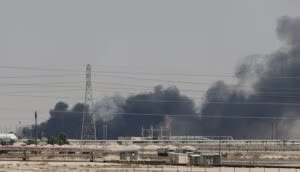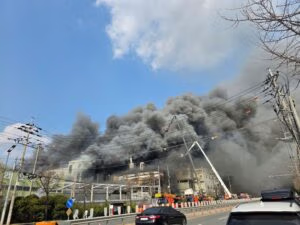

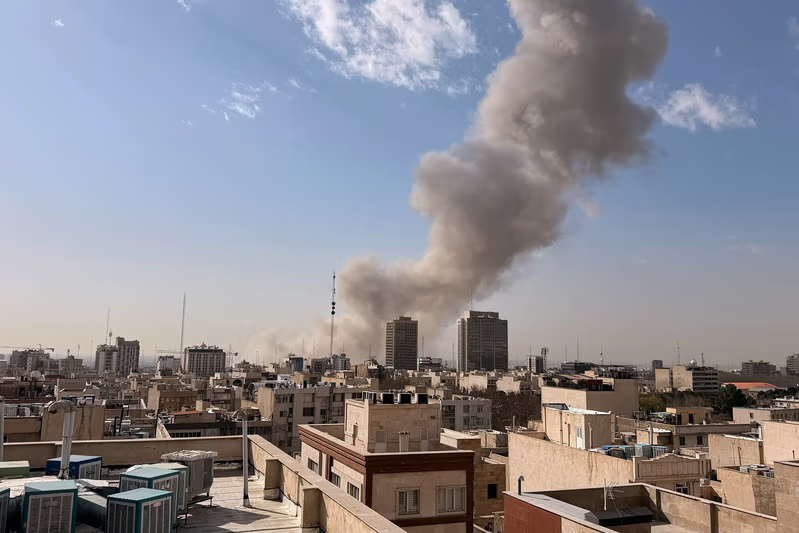
The conflict in West Asia is beginning to disrupt global energy supply chains, constraining the flow of oil and natural gas and raising concerns about availability, even as India moves to secure supplies through diplomatic channels.
Analysts say the impact is no longer limited to price volatility. Portions of global energy flows have already been affected, tightening supply in a market that was only recently stabilising.
“10% to 12% of your oil flow is disrupted, and 20% of your gas flows are disrupted,” said Anindya Banerjee of Kotak Mahindra Securities to ANI, describing the scale of the disruption.
The Strait of Hormuz, a critical artery for global oil shipments, has emerged as a focal point. Any sustained disruption in the passage threatens to further constrain supply, with ripple effects across energy-importing economies.
India, one of the world’s largest energy consumers, is relying on a combination of diversified sourcing and diplomatic outreach to maintain steady inflows. Officials and analysts say the country’s ability to engage with multiple suppliers across geopolitical lines has provided a degree of insulation.
“The only country which can do it with ease is India on a global scale,” Banerjee said, referring to India’s positioning in global energy markets.
The disruption comes at a time when global markets are already grappling with uncertainty. Higher energy prices could feed into inflation, complicating central banks’ outlooks and potentially delaying monetary easing.
For now, India appears to be managing the situation, supported by its broad supplier base and strategic engagement. But analysts caution that a prolonged conflict could deepen supply constraints, testing both market stability and policy responses.
The evolving situation underscores a broader shift in global energy dynamics, where geopolitical risk is once again emerging as a central driver of supply and pricing.