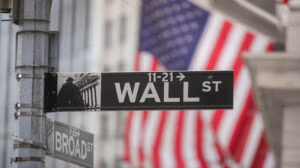


By almost any measure, last year was kind to investors.
Markets rose together. Losses were rare. Volatility faded. Even strategies designed to protect portfolios delivered strong returns. As the new year begins, that calm has carried over into January’s first trading session, with global stocks extending gains and confidence on Wall Street largely intact.
But beneath the optimism lies an uncomfortable reality. The better everything performed in 2025, the harder it may be to repeat.
When Every Asset Is Working, Something Is Changing
The defining feature of 2025 was not a single rally. It was the way nearly all assets moved in sync.
Equities surged. Bonds gained at the same time. Credit markets tightened. Commodities climbed even as inflation cooled. Financial conditions eased to near their loosest levels of the year, reflecting higher valuations and a shared belief in continued growth and artificial intelligence-driven investment.
According to Bloomberg data, the combined performance of global stocks, bonds, credit, and commodities was the strongest since 2009. That earlier episode followed a financial crisis and unprecedented policy intervention. Last year did not.
This synchrony made diversification feel effortless. In practice, it quietly reduced protection.
When assets designed to offset one another rise together, portfolios become more exposed to a single assumption. That assumption is that growth remains strong, inflation stays contained, and policymakers remain supportive.
Wall Street Still Believes the Story
As markets move deeper into 2026, most large institutions remain aligned.
Forecasts compiled by Bloomberg News from more than 60 firms show continued confidence in the same pillars that drove last year’s gains. Heavy investment in AI. Resilient economic activity. Central banks that can ease policy without triggering another inflation cycle.
Markets have already acted on that belief.
U.S. equities returned about 18% in 2025, delivering a third straight year of double-digit gains. Global stocks rose roughly 23%. Government bonds advanced as well, with global Treasuries up nearly 7% after the Federal Reserve cut interest rates three times.
Optimism is not theoretical. It is fully priced in.
Calm Markets Are Sending a Warning
Risk indicators tell a similar story.
Measures of U.S. bond-market volatility recorded their steepest annual drop since the period following the global financial crisis. Credit markets followed suit. Investment-grade spreads tightened for a third consecutive year, pushing average risk premiums below 80 basis points, according to Bloomberg data.
Commodities reinforced the sense of calm. A Bloomberg index tracking the sector gained around 11%, led by precious metals. Gold reached multiple record highs, supported by central-bank demand, easier U.S. monetary policy, and a weaker dollar.
For investors, the signal was consistent across markets. Risk felt manageable. Protection felt less urgent.
Inflation Remains the Pivot Point
That confidence rests on one variable. Inflation.
While price pressures eased through much of 2025, the progress remains fragile. Energy markets, supply disruptions, or policy missteps could reverse the trend quickly.
The disconnect between markets and households is already visible.
The Bloomberg Billionaires Index shows the world’s 500 richest people added a record $2.2 trillion to their wealth last year. At the same time, U.S. consumer confidence fell for a fifth consecutive month in December.
Markets are betting that inflation stays controlled. Public sentiment suggests less certainty.
The Return of Old-School Portfolios
One of last year’s quieter developments was the comeback of traditional allocation strategies.
The classic 60/40 portfolio, split between stocks and bonds, returned about 14%. An index tracking risk-parity strategies rose 19%, its strongest year since 2020.
Despite that performance, investors have not rushed back into balanced funds after years of outflows. The recovery has been driven by asset prices rather than renewed conviction.
What This Means Going Forward
Asset allocators remain broadly comfortable with current positioning. Many argue that economic momentum and policy support can justify higher valuations, at least in the near term.
The challenge is that markets now offer less tolerance for surprises.
Growth needs to remain steady. Inflation needs to stay contained. AI investment needs to translate into sustained earnings, not just enthusiasm.
2025 rewarded alignment. 2026 may test it.
For investors, the question is no longer whether markets are strong. It is whether strength across everything leaves room for anything to go wrong.