
Inside Britain’s Most Powerful Office
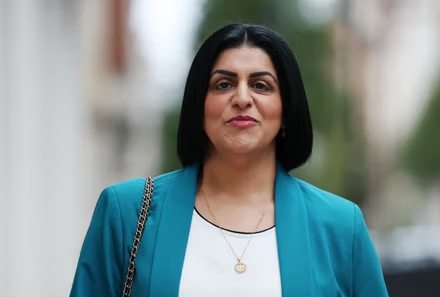
Shabana Mahmood stands among the most consequential figures in modern British politics — a barrister-turned-legislator whose rise from Birmingham’s inner-city classrooms to the heart of Westminster reflects discipline, conviction, and quiet resolve. Now serving as the UK’s Home Secretary and one of the most senior figures in the Labour government, her name is increasingly mentioned in discussions about the party’s long-term leadership. Should that path continue, Mahmood could become Britain’s first Muslim woman prime minister — a moment of historic significance.
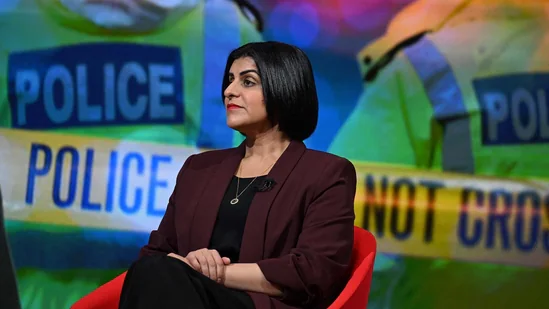
Image Credit- AFP
Born in Birmingham in 1980 to Pakistani parents from Mirpur, Mahmood grew up at the intersection of faith, education, and civic engagement. Her father, an engineer who later ran a small business, also chaired the local Labour Party, exposing her early to grassroots politics. She often accompanied him on campaign trails, absorbing the rhythms of public life. Yet politics was not her original ambition. Like many of her generation, Mahmood was inspired by courtroom dramas of the 1990s and aspired instead to become a barrister, drawn by the ideals of justice and reasoned argument.
Legal Foundations and Early Ambitions
After excelling at King Edward VI Camp Hill School for Girls, Mahmood studied law at Lincoln College, Oxford, graduating in 2002. Her time at Oxford proved formative. She served as president of the Junior Common Room and developed a growing interest in leadership and institutional reform. A scholarship from Gray’s Inn enabled her to complete the Bar Vocational Course at the Inns of Court School of Law, after which she qualified as a barrister specialising in professional indemnity law.
Between 2003 and 2007, Mahmood built a solid legal career at leading firms, earning respect for her diligence and precision. Yet the pull of public service remained strong. She came to see politics as the arena where systemic change was possible — where the rules shaping justice itself could be rewritten. By the end of the decade, she was ready to step fully into political life.
Breaking Barriers in Parliament
In 2010, Mahmood was selected as Labour’s candidate for Birmingham Ladywood, a decision that sparked debate within the party. She went on to win decisively, securing 55.7 per cent of the vote. Alongside Rushanara Ali and Yasmin Qureshi, she became one of the first Muslim women elected to the UK Parliament. Her election marked more than personal success; it reflected a Parliament beginning, slowly, to mirror the diversity of modern Britain.
Over the following years, Mahmood established a reputation as a serious and principled policymaker. She held several shadow ministerial roles, including Shadow Financial Secretary to the Treasury. In 2015, she resigned from the front bench following the election of Jeremy Corbyn as Labour leader — a move widely interpreted as an expression of political integrity rather than ambition.
Building Influence Under Starmer
Mahmood’s return to prominence came under Keir Starmer. Appointed National Campaign Coordinator in 2021, she played a central role in professionalising Labour’s election strategy and restoring its credibility with voters. Following Labour’s landslide victory in 2024, she was appointed Secretary of State for Justice and Lord Chancellor, becoming the first Muslim and only the third woman to hold the historic office.
Her tenure was marked by decisive pragmatism. Confronted with severe prison overcrowding, Mahmood authorised an emergency early-release programme, describing the situation as a “ticking time bomb.” Though controversial, the decision underscored her readiness to prioritise stability over political caution.
The Home Secretary Era
In 2025, Mahmood was appointed Home Secretary, placing her at the centre of Britain’s most contentious debates: immigration, policing, and national security. Associated with Labour’s Blue Labour tradition, she adopted a firm stance on border control and public order. Policies such as tighter migration rules and expanded use of facial recognition technology attracted scrutiny, yet Mahmood defended them as essential to maintaining public confidence.
Now in her mid-40s, Shabana Mahmood embodies a changing Britain — pragmatic, plural, and ambitious. Whether or not she ultimately seeks the premiership, her rise already represents a turning point in British politics. If she does one day enter 10 Downing Street, it would signal not only a milestone in representation, but a broader evolution in how leadership is defined in modern Britain.