

US President Donald Trump has raised fresh questions about Netflix’s proposed $72 billion acquisition of Warner Bros. Discovery, signaling that the deal could face major antitrust hurdles as regulators prepare for a lengthy review.
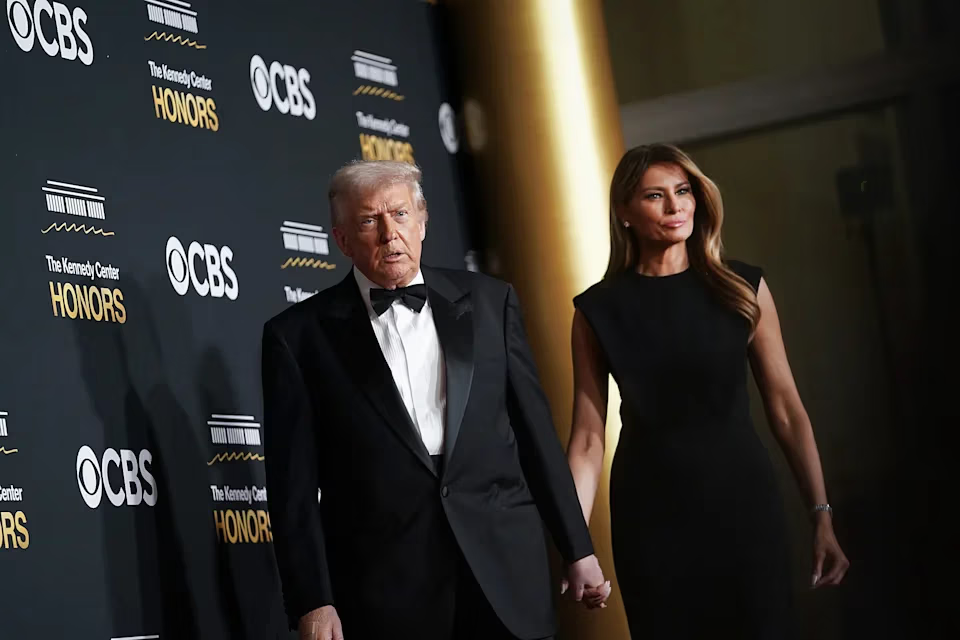
Speaking to reporters on Sunday at the Kennedy Center, Trump said the combined market share of Netflix and Warner Bros. Discovery “could be a problem,” underscoring concerns that the merger would give Netflix unprecedented control over the global streaming market. His remarks immediately rattled investors and fueled speculation that US regulators may challenge the deal.
Why Trump’s Comments Matter
Trump confirmed he had recently met with Netflix co-CEO Ted Sarandos to discuss the acquisition. While the president said the deal must “go through a process,” he stressed that Netflix already has a “very big market share”, and that absorbing Warner Bros. would raise it “a lot.”
Trump also said he intends to be personally involved in decisions around the proposed merger, raising uncertainty over whether the administration will ultimately support or oppose it.
The market reacted swiftly. Prediction platform Polymarket saw the probability of the deal closing by the end of 2026 plunge from 60% to 23% after Trump’s remarks. On the Blue Ocean trading platform, Warner Bros. stock gained 1%, while Netflix shares fell 1.4%.
What’s at Stake in the Antitrust Review
If approved, the acquisition would unite:
- Netflix, the world’s largest streaming service
- HBO Max, home to Warner Bros.’ expansive library
The Justice Department’s antitrust division is expected to argue that the merger could exceed a 30% market share threshold, a point at which US regulators often raise legal objections.
Netflix’s Counterargument
Netflix plans to push back by insisting that the competitive landscape is much broader than streaming platforms alone. The company is expected to claim that rivals such as:
- YouTube (Alphabet)
- TikTok (ByteDance)
should be considered part of the same attention-based marketplace. That argument would significantly dilute Netflix’s apparent dominance.
Sarandos reportedly told Trump during a recent White House meeting that Netflix is far from a monopoly and has faced subscriber losses in the past, highlighting the volatility of the streaming business.
Political and Industry Backlash
Warner Bros.’ decision to partner with Netflix has created political ripples. The deal effectively sidelined Paramount Skydance, backed by billionaire Larry Ellison, whose company has strong ties to the Trump administration. Trump has publicly praised Paramount’s merger, suggesting the Netflix bid may face tougher political headwinds.
Lawmakers across parties, including Rep. Darrell Issa and Sen. Elizabeth Warren, have already criticized the Netflix–Warner Bros. tie-up as potentially detrimental to consumer choice. The deal would create a global streaming giant with an estimated 450 million users, amplifying concerns about pricing, content control, and market consolidation.
Industry voices remain split. While critics warn of monopoly risk, market analyst Ed Yardeni argues that “technology monopolies don’t last very long” due to rapid industry disruption.
Global Scrutiny Ahead
The deal will not only face U.S. review. European Union regulators are expected to launch a deep investigation, and in the UK, lawmakers have begun raising questions about its impact on competition and consumer prices.
How Netflix Plans to Win the Case
Internally, Netflix believes it can ultimately secure approval. The company is expected to argue:
- Amazon Prime Video and Disney+ remain powerful competitors.
- Over 75% of HBO Max subscribers already have Netflix, making the services complementary.
- Combining Netflix and Warner Bros. could reduce costs, streamline back-end technology, and allow bundled pricing, ultimately lowering prices for consumers.
Still, with political pressure mounting and regulators wary of mega-mergers, Netflix faces a daunting road ahead.