Chinese artificial intelligence stocks surged on Thursday, with several firms launching enhanced models, and leading policymakers renewed calls for a broader adoption of the technology.
Hong Kong-listed Zhipu AI, which is known as Knowledge Atlas Technology, shot up 30 percent following the launch of its GLM-5, an open-source large-language model with more coding features and long-term agent activities.
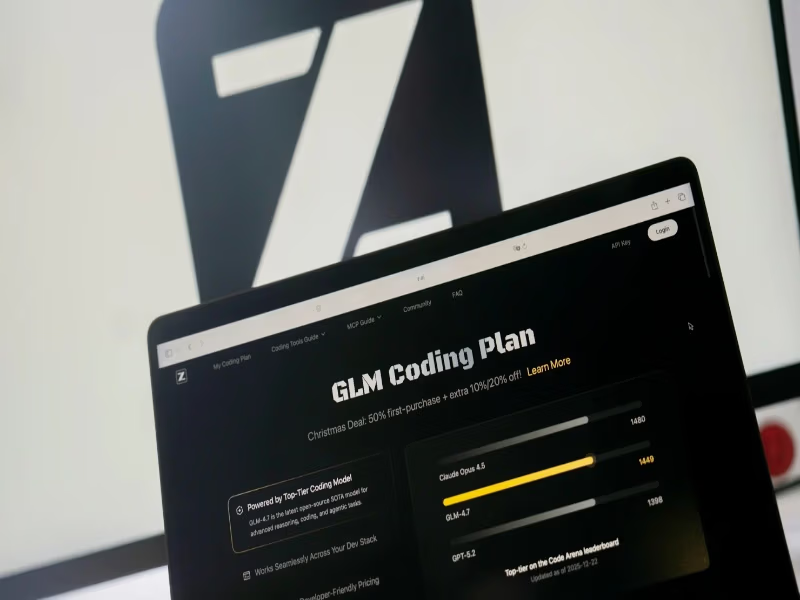
The company asserted that the model scored comparable to Anthropic’s Claude Opus 4.5 in terms of coding benchmarks, and it outperforms Google Gemini 3 Pro on certain tests. CNBC was unable to confirm those allegations.
However, MiniMax witnessed shares in Hong Kong climb up to 11 percent following Wednesday’s launch of its updated M2.5 open-source model with enhanced AI agent tools on its overseas website.
The company mentioned M2 as “a model built for Max coding & agentic workflows.” The rally follows an escalation of competition in the field of AI as Chinese developers scramble to keep up with U.S. competitors with a torrent of new models and agent releases.
According to a report from the South China Morning Post, DeepSeek, which swept the world with its debut last year, also released an update on Wednesday to its flagship AI model, with support for a larger context window and more up-to-date knowledge.
Ant Group also announced its open-source artificial intelligence (AI) model, Ming-Flash-Omni 2.0, on Wednesday. The “unified multimodal model” is capable of developing speech, music, sound effects, and visuals.
The releases also boosted investor sentiment on suppliers to AI companies. Shanghai-listed shares of UCloud Tech, which offers computing support for Zhipu, increased by 20 percent to hit the daily limit.
SenseTime, which has switched its emphasis from developing facial recognition surveillance technology to offering AI software platforms, surged 5 percent in Hong Kong. The Shanghai STAR AI Industry Index advanced 1.7 percent and then reversed gains.
Chinese Premier Li Qiang on Wednesday called for a broad-scale initiative to implement AI “in diverse scenarios to unlock the potential of the technology.”
The AI startup boom arrives in the wake of a larger decline of Chinese technology giants with AI units. Shares of Tencent and Alibaba dropped by 2.6 percent and 2.1 percent, respectively. The Hong Kong Hang Seng Tech index fell 1.7 percent.