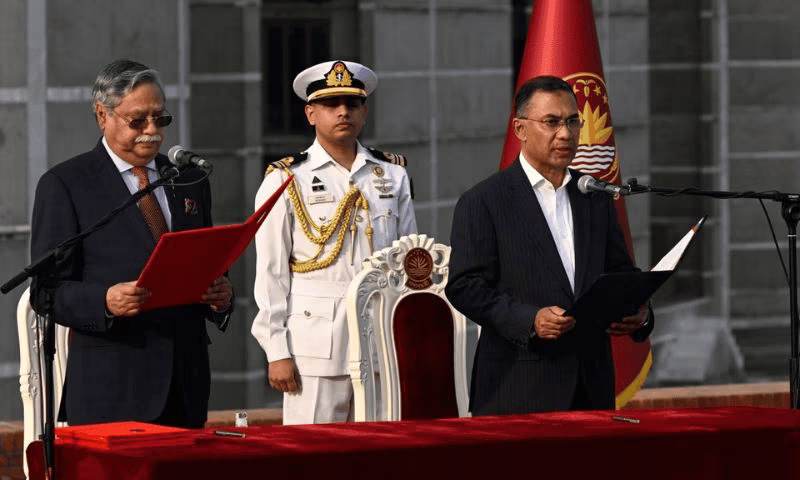
In a historic political transition, Tarique Rahman has taken office as Bangladesh’s new Prime Minister, marking a significant change in the country’s leadership. The development unfolds amid ongoing political realignment and follows a general election held earlier this month.
Tarique Rahman, a senior figure in Bangladesh’s political landscape and leader of the Bangladesh Nationalist Party (BNP), succeeds the previous administration as the head of government. His assumption of office comes at a time when the South Asian nation is navigating economic challenges, regional diplomatic dynamics, and efforts to broaden political participation.
The handover ceremony drew representatives from key political parties and senior government officials, underscoring the formal transfer of executive power. Observers note that Rahman’s rise to the premiership reflects years of political shifts and negotiations within Bangladesh’s parliamentary system.
Rahman’s leadership agenda is expected to focus on economic revival, strengthening democratic institutions, and enhancing Bangladesh’s role on the regional and global stage. Economists and policy experts have pointed to several priority areas for the new government, including stabilising macroeconomic growth, attracting foreign investment, addressing inflationary pressures, and improving infrastructure.
On the diplomatic front, stakeholders are closely watching how the new government will balance ties with major partners in South Asia, the Middle East, China, and the West. Bangladesh has maintained robust economic engagement with Gulf countries, particularly through remittances from expatriate workers, energy imports, and trade partnerships. Any shifts in political direction could influence foreign direct investment and geopolitical alignments in the region.
Market analysts say financial markets may react cautiously to the leadership change, particularly in sectors sensitive to domestic policy and international relations. Currency stability, bond yields, sovereign credit ratings, and investor confidence will be areas to watch as the new administration unveils its policy priorities.
Tarique Rahman’s appointment also draws attention to internal governance reforms in Bangladesh. Political commentators suggest that his government will likely pursue initiatives to promote institutional transparency, judicial independence, and expanded digital and economic inclusion.
Meanwhile, economists stress the importance of continuity in macroeconomic policy, especially given external pressures such as global commodity prices, supply chain disruptions, and inflationary trends affecting many emerging markets.
As Rahman begins his tenure, international partners and investors will be assessing statements from the new administration to gauge policy direction and its implications for regional stability and economic cooperation.
The coming weeks are expected to set the tone for Bangladesh’s governance trajectory, with early policy decisions offering insights into how the new leadership plans to manage the nation’s economic agenda and diplomatic partnerships.