
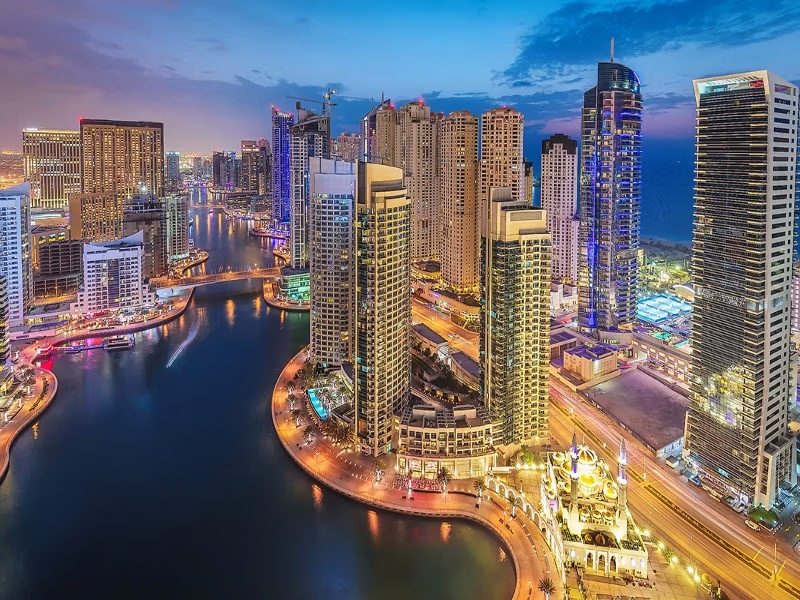
New figures reported that the increasing demand drove Dubai’s real estate rental value to surge 17 percent year-on-year in 2025 to reach 126.4 billion Emirati dirhams ($34 billion), an indication of the market’s strength and the sustained pace of residential and commercial activity.
Statistics provided by the Dubai Land Department showed that there was a 6 percent growth in registered tenancy contracts in the year 2025, taking the total number of agreements to 1.38 million.
According to a statement, besides an increased demand, a wide range of housing choices and well-developed regulatory frameworks characterizing and regulating the relations between all stakeholders supported the performance.
The increase in the numbers highlights the stability of the Dubai real estate industry and its expanding operational maturity. This projection is also in line with the forecasts that suggest a range of about 180,000 additional units will be given in Dubai between 2026 and 2028.
Moody’s report released in February stated that this dramatic increase in supply, as compared to previous years, would tend to kill demand and restrain price increases.
The newly released statement said, “The number of new tenancy contracts rose to more than 513,000, a 10 percent increase, reflecting Dubai’s strong appeal as a destination to live and work. In parallel, renewed tenancy contracts increased by 3 percent to more than 514,000, clearly indicating higher levels of stability and customer satisfaction.”
It added: “This balanced rental performance is clearly aligned with the objectives of the Dubai Economic Agenda D33, which focuses on enhancing quality of life and reinforcing Dubai’s position as a global destination to live, work, and invest, alongside the Dubai Real Estate Sector Strategy 2033, which aims to establish a sustainable market based on a balance between ownership and renting, clear regulatory frameworks, and an enhanced customer experience.”
The statement also emphasized that the stability of the rental market points to its pivotal role as a natural transition to homeownership and a fundamental component of social and economic stability. It also facilitates the development of a healthy real estate ecosystem that can help to support the long-term growth of Dubai.
There was also evident improvement in the number of projects being completed in the year 2025, with 124 developments being delivered, increasing by 7 percent, reaching 27.5 billion dirhams, which is 23 percent.
The statement added, “The number of sold units increased by 25 percent to 147,500 units, with a total value of 280 billion dirhams, reflecting a 30 percent increase in value. Meanwhile, the value of sold villas increased by 12 percent despite a decline in volume, indicating a shift in purchasing preferences toward higher-value real estate products.”
It reported, “At the regulatory level, the real estate market witnessed unprecedented expansion in licensing, with 4,122 real estate offices registered, a 102 percent increase, bringing the total number of active real estate offices in Dubai to 10,182. This reflects the expansion of the business base and the increasing demand for brokerage, property management, development, and consultancy services within a well-regulated ecosystem governed by clear standards.”