

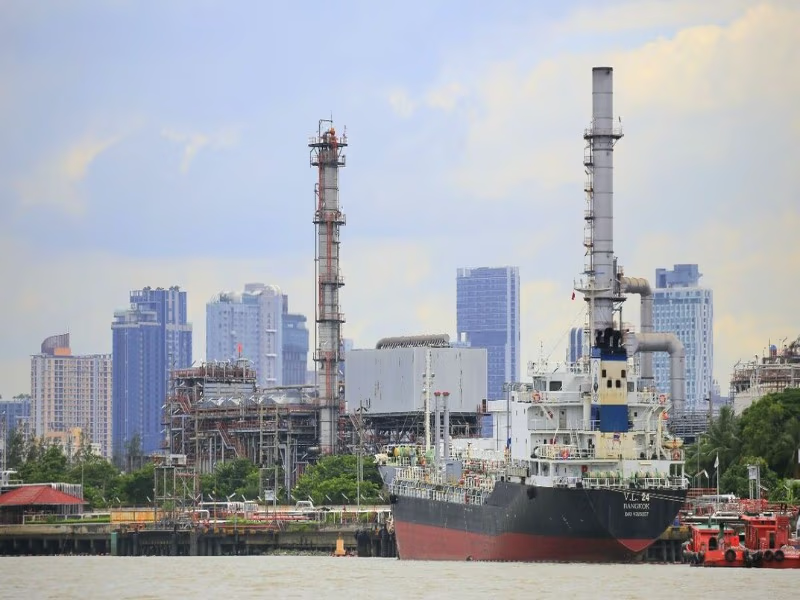
The Financial Times reports that marine insurance firms are contemplating the cancellation or repricing of policies in the Middle East.
This drive comes after the US and Israeli attacks against targets within Iran, which were followed by missile and military counterattacks in some of the countries in the region.
Marine brokers anticipate that insurance premiums on vessels will increase by up to 50 percent, as the area has been declared a “war zone.” Ship owners are considering bypassing their vessels to avoid the Strait of Hormuz and reduce risks to crews and cargo.
The situation in the Middle East after multiple nations shut down their airspace or partially affected the air traffic in the region, as airlines operating in the region, as well as international airlines, cancelled or postponed flights.
The following day, on the morning of March 1, several large explosions were witnessed in the Iranian capital, Tehran, after Israel announced it was declaring what it termed a “preemptive strike.”
US President Donald Trump said in a video message that the US had started moving to “major combat operations” in Iran, stating that the mission was to protect the American people by eliminating what he termed as the imminent threat by the Iranian regime.
However, the attacks led to the announcement of the suspension of regional and international flights by several airlines to certain countries in the region.
These military events are coinciding with the situation when major shipping companies had already evaded the Red Sea and Suez Canal routes because of the security tensions, returning to the Cape of Good Hope route, which not only raises shipping costs but also strains global supply chains.
As the airspace closures in some countries in the region continue to take place, the threat of air traffic and trade disruption is on the rise.
Oil markets are monitoring any indication of a possible supply crunch caused by a region that ranks among the most crucial energy production centres in the world.