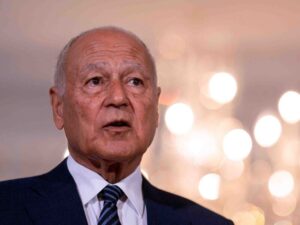

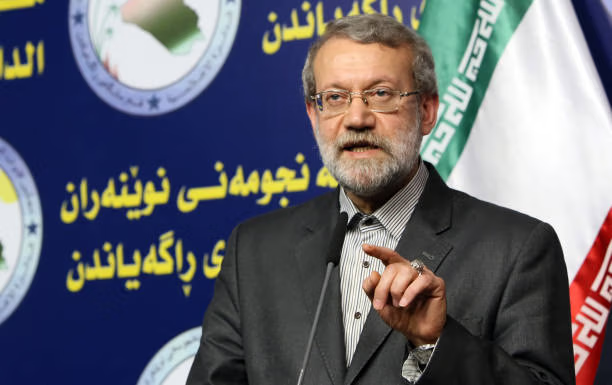
Ali Larijani has re-emerged in 2026 as one of the most influential figures inside Iran’s political system, stepping into a defining role at a moment of severe regional tension. Long known as a seasoned establishment insider, Ali Larijani now sits at the centre of Tehran’s security response as confrontation with the United States and Israel intensifies. His prominence this year is not sudden. It is the result of decades spent navigating the Islamic Republic’s most powerful institutions.
Born in 1958 into a prominent clerical family, Ali Larijani was raised within the ideological framework of post-revolution Iran. His father was a respected religious scholar, and over time the Larijani family became deeply connected to the judiciary and political elite. These networks helped anchor him inside the system, but it was his own career trajectory that turned him into a durable powerbroker.
Unlike many conservative officials whose authority stems primarily from religious credentials, Ali Larijani built an academic foundation that blended science and philosophy. He studied mathematics and computer science before earning advanced degrees in Western philosophy, focusing his doctoral research on Immanuel Kant. This unusual intellectual path gave him a reputation for analytical thinking and strategic calculation rather than emotional rhetoric.
His early years in public life included service in the Revolutionary Guard, followed by senior cultural and media posts. He later became head of Iran’s state broadcasting authority, strengthening his ties with conservative institutions. In 2005, Ali Larijani entered one of the country’s most sensitive arenas when he was appointed Secretary of the Supreme National Security Council and chief nuclear negotiator. In that capacity, he represented Iran in complex negotiations with Western governments, gaining direct experience in high-stakes diplomacy.
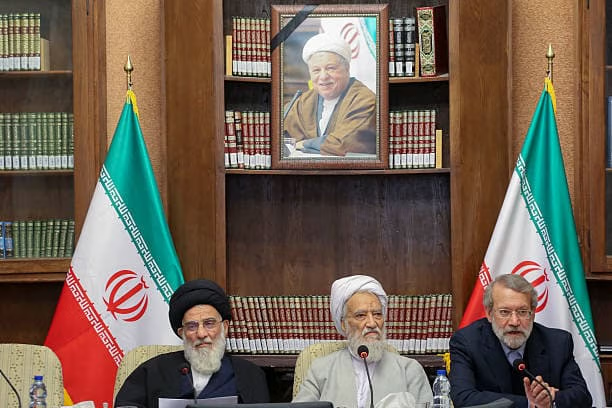
From 2008 to 2020, Ali Larijani served three consecutive terms as Speaker of Parliament. During this period, he influenced domestic legislation and foreign policy direction. He played a key role in securing parliamentary approval for the 2015 nuclear agreement, reinforcing his image as a conservative who could support diplomacy when it aligned with national strategy. Even when internal political dynamics shifted and he was sidelined from presidential contests, his institutional influence did not disappear.
A Harder Tone in 2026
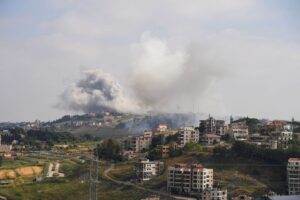
The events unfolding in 2026 have transformed Ali Larijani’s public posture. Following recent military strikes and heightened regional tensions, he adopted a sharper tone, stating that Iran would not negotiate under pressure and warning that any aggression would bring consequences. At the same time, he emphasized constitutional continuity and institutional stability, signaling that the state’s core mechanisms remain intact despite external shocks.
This dual messaging — firm externally, controlled internally — reflects Ali Larijani’s long experience inside Iran’s power structure. He understands both the importance of projecting strength and the necessity of preserving institutional order. His return to the role of Secretary of the Supreme National Security Council in 2025 placed him directly at the centre of defence and strategic planning, and in 2026 that responsibility has become even more critical.
As tensions reshape the regional landscape, Ali Larijani stands as one of the key architects of Iran’s response. Whether the coming months lead toward prolonged confrontation or a recalibrated diplomatic path, his decades of experience in parliament, media leadership and nuclear diplomacy position him as a pivotal figure in shaping the country’s next strategic direction.