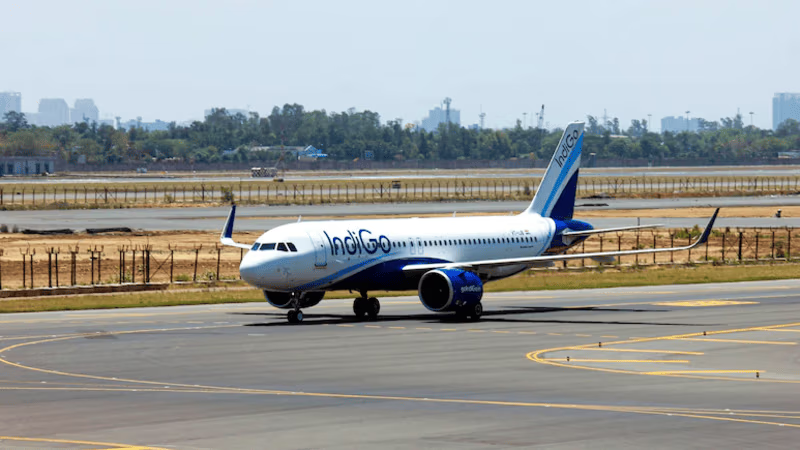
The Middle East airspace impact on airlines is intensifying as escalating regional tensions trigger route closures, flight cancellations, and a surge in jet fuel prices, placing renewed pressure on Indian carriers operating heavily across Gulf corridors. Airlines such as IndiGo and SpiceJet maintain significant connectivity between India and key Gulf hubs, including Dubai, Abu Dhabi, Doha, and other transit points, making them particularly sensitive to operational disruptions in the region. As certain air corridors are restricted or temporarily closed, aircraft are being rerouted around affected zones, increasing flying time and fuel burn while reducing daily aircraft utilisation, a core efficiency metric for low-cost carriers.
From a Middle East perspective, the aviation ecosystem is deeply interconnected, with Gulf airports functioning as critical transit and labour mobility gateways for millions of expatriates and business travellers. Any sustained airspace limitation not only affects airline profitability but also has ripple effects across airport operators, ground handling services, and regional tourism flows. Longer flight paths translate directly into higher aviation turbine fuel consumption at a time when global crude oil prices have risen sharply amid concerns over potential supply disruptions in strategic waterways. Fuel constitutes one of the largest cost components for airlines, and a sustained increase materially compresses margins, especially for carriers operating on thin spreads.
Flight cancellations and schedule adjustments on westbound and Gulf-bound routes have further complicated revenue management strategies, as passenger demand may shift in response to uncertainty. While airlines can attempt to pass higher fuel costs on to passengers through fare adjustments, competitive pressures in both the Indian and Middle Eastern aviation markets limit pricing flexibility. Carriers must therefore balance maintaining market share with preserving yields, particularly during peak travel periods tied to expatriate traffic.
For IndiGo, which has expanded its footprint in the Gulf region in recent years, network scale offers some operational flexibility, yet exposure to rerouting costs and fuel inflation remains significant. SpiceJet, with a more constrained financial profile, faces a tighter margin environment if disruptions persist. Industry analysts expect airlines to reassess route economics, optimise fleet deployment, and potentially trim frequencies on less profitable sectors if volatility continues.
The Middle East airspace impact on airlines underscores how geopolitical instability can quickly translate into operational and financial strain for carriers dependent on regional connectivity. With Gulf airspace serving as a strategic bridge between Asia, Europe, and Africa, prolonged disruption could reshape traffic patterns and cost structures across multiple aviation markets. For now, airline profitability will hinge on how swiftly airspace normalises and whether energy markets stabilise, determining the depth and duration of the financial impact on cross-border carriers.