
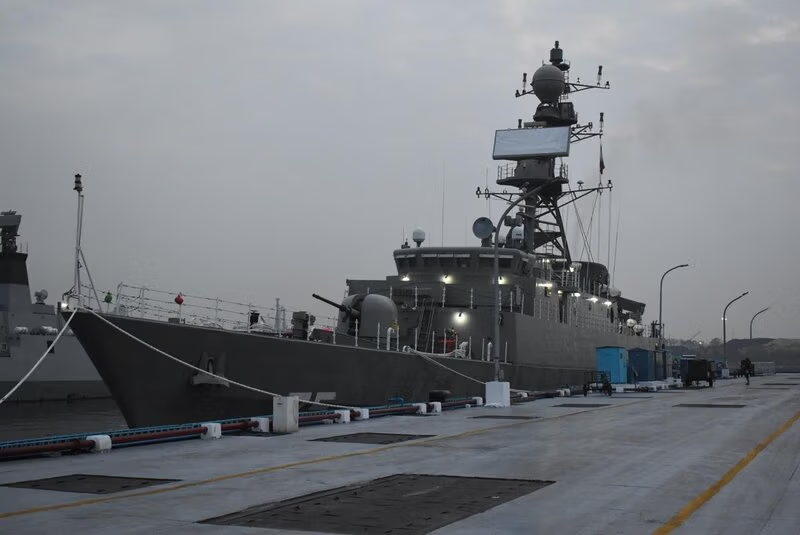
The Iranian ship attack near Sri Lanka has intensified concerns over the widening maritime dimension of the ongoing regional conflict after a vessel linked to Iran was reportedly struck by a submarine in waters close to Sri Lanka, leaving dozens injured and more than 100 people missing.
According to reports, the incident occurred in the Indian Ocean shipping corridor near the island nation of Sri Lanka, a route that serves as a major passage for commercial and naval traffic connecting the Middle East with Asian markets. Initial information suggests the Iranian vessel sustained heavy damage after the suspected underwater strike, leading to a large-scale emergency response and rescue efforts involving maritime authorities and nearby vessels.
Authorities indicated that at least 78 people were injured in the attack, while search operations are underway for over 100 individuals reported missing following the incident. The ship was believed to be carrying a large crew when the attack occurred, though full details regarding the vessel’s mission, cargo, or destination have not yet been officially confirmed. Maritime security agencies are monitoring the situation closely as rescue teams attempt to locate survivors and assess the scale of damage caused by the strike.
The incident marks a significant escalation in tensions across the wider Indian Ocean region, which has become increasingly sensitive due to ongoing geopolitical developments in the Middle East. Shipping lanes near Sri Lanka are among the busiest in the world, linking oil-producing regions with energy-importing economies in Asia. Any security threat in this corridor raises concerns about maritime safety, trade disruption, and energy supply chains.
Analysts note that naval activity across the broader region has intensified in recent weeks as countries move to protect commercial shipping and strategic maritime infrastructure. While officials have not yet confirmed the identity of the submarine involved, the attack underscores the potential for conflict spillover beyond the immediate Middle East theatre into critical international waterways.
Sri Lankan authorities have not reported damage to domestic infrastructure but are coordinating with international maritime agencies to monitor the situation and ensure navigational safety for passing vessels. Meanwhile, shipping companies and insurers are closely watching developments, as any increase in maritime risk could lead to higher insurance premiums and operational costs for vessels transiting the region.
The Iranian ship attack near Sri Lanka highlights the growing vulnerability of maritime routes during periods of geopolitical tension, with global trade networks and energy flows potentially affected if security risks continue to spread across the Indian Ocean. Rescue operations and investigations are ongoing, and further details are expected as authorities work to establish the circumstances surrounding the strike and the full extent of casualties.