

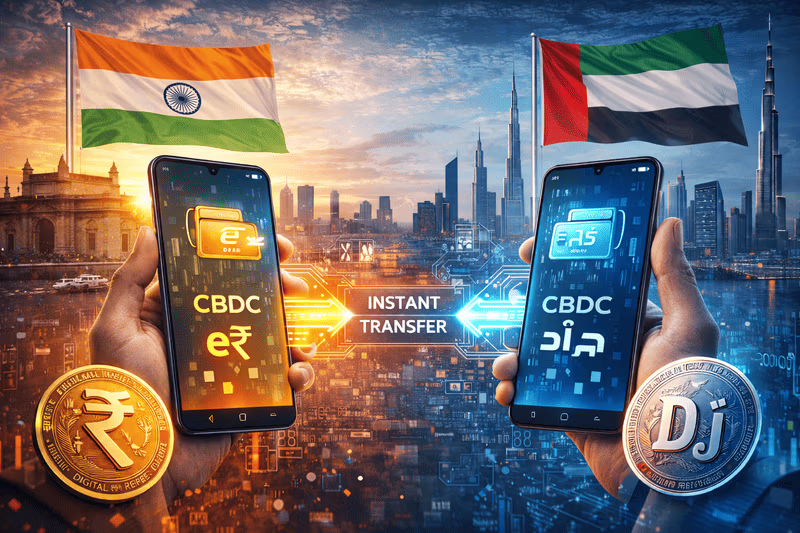
India-UAE CBDC transfers could soon become a reality as the central banks of the two countries explore linking their sovereign digital currencies to enable instant cross-border payments. The initiative would allow money to move directly between digital wallets, bypassing traditional banking intermediaries, potentially making remittances faster and cheaper for millions of users.
The project involves cooperation between the Reserve Bank of India and the Central Bank of the UAE, which are studying ways to connect their respective central bank digital currencies. India has been piloting its digital rupee, known as the e-Rupee, since 2022, while the UAE introduced the Digital Dirham as legal tender in 2024.
If implemented, the system would allow users to send funds directly from one CBDC wallet to another across borders. For example, a fintech platform operating in both countries could debit a user’s digital rupee wallet in India and instantly credit the equivalent value to the user’s digital dirhams wallet in the UAE.
The potential linkage is significant because the UAE remains one of the largest sources of remittances to India. More than 4 million Indians live and work in the Gulf nation, and remittance flows from the UAE account for roughly 19 percent of India’s total inward remittances.
India’s CBDC initiative has already gained traction domestically. According to central bank data, more than eight million users currently hold e-Rupee wallets, with over 120 million transactions worth about ₹28,000 crore recorded since the currency’s launch.
Retail CBDC transactions allow individuals to pay other users or merchants directly through digital wallets, while wholesale CBDC is designed for larger financial transactions such as interbank settlements and institutional payments.
Experts say linking the two digital currency systems could create a parallel channel to traditional banking routes used for cross-border remittances. Apart from personal remittances, such a corridor could support payments for trade, business transactions, and even government-to-government transfers.
However, the initiative also presents regulatory and technological challenges. One major issue is balancing the privacy features associated with digital cash with the need for traceability in cross-border transactions to comply with foreign exchange and anti-money-laundering regulations.
Analysts also note that CBDC wallets are typically designed for smaller transactions, meaning larger transfers may still rely on conventional banking infrastructure. Interoperability with other countries’ digital currency systems and ensuring robust digital infrastructure will also be key to scaling such cross-border networks.
India’s central bank has indicated that it is actively exploring CBDC corridors with other countries as well. Officials believe that interoperable digital currencies could eventually provide the same speed and efficiency promised by private stablecoins, while maintaining the security and regulatory oversight of sovereign currencies.
If successfully implemented, India-UAE CBDC transfers could mark a major step toward faster global payments and reshape the way remittances and cross-border transactions are conducted between the two major economic partners.