
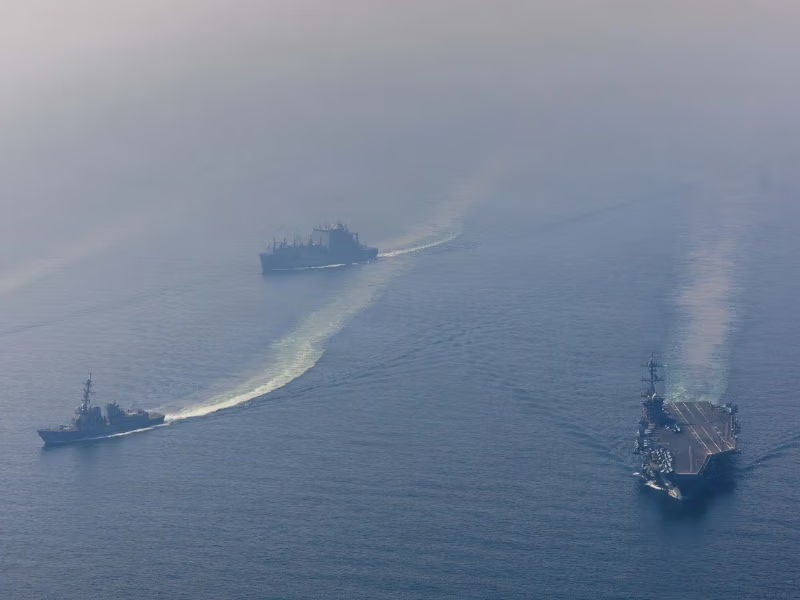
The U.S. Central Command on Tuesday confirmed that American troops had sunk several Iranian ships, including 16 minelayers, in the Strait of Hormuz, amid reports that Tehran was planning to mine the waterway, vital to world energy supplies.
This announcement by the U.S. came after President Donald Trump had posted that in case Iran had planted any mines in the Strait, “we want them removed, IMMEDIATELY!”
Trump said in a Truth Social post, “If for any reason mines were placed, and they are not removed forthwith, the Military consequences to Iran will be at a level never seen before. If, on the other hand, they remove what may have been placed, it will be a giant step in the right direction!”
The U.S president later claimed that 10 inactive minelaying ships were sunk, with “more to come.”
According to a CNN report on Tuesday, Iran had begun to lay mines in the Strait of Hormuz, although not in large numbers. Sources that CNN spoke to said only a “few dozen” had been laid in recent days.
The report also indicated that Iran continues to have over 80 percent of its small boats and minelayers and could potentially deposit hundreds of mines in the waterway.
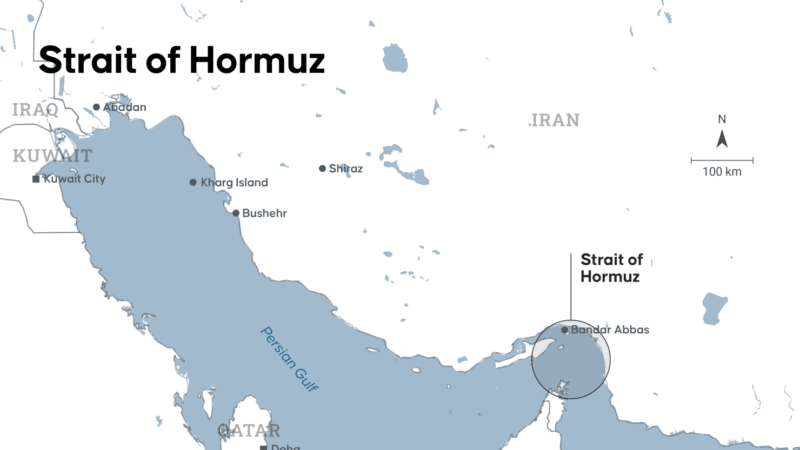
The strait lies between Oman and Iran, with an average of approximately 13 million barrels per day of crude going through the strait in 2025, or about 31 percent of all crude flows, as suggested by energy consultancy firm Kpler.
The oil prices have shot up significantly since the start of the conflict, reaching almost $120 a barrel on Monday, but then falling to 83.8 a barrel in the U.S. WTI crude oil and 87.9 a barrel in the global benchmark Brent.
The same was reported by CBS News that Iran “may be getting ready” to deploy naval mines, said the country was utilizing smaller crafts that can carry two to three mines each to lay them in the strait.
The report stated that although the mine inventory of Iran is not publicly disclosed, it was estimated that there were between 2,000 and 6,000 naval mines over the years.
According to the Robert Strauss Center of International Security and Law in Texas, mines would prove beneficial to be used by Iran on the shipping lanes of the Strait of Hormuz either directly to cause damage or as a deterrent, redirecting the ships to an allocated better path that would suit Iran better.
A CIA report, declassified in 2009, said that “the Iranians appear to have recognized the limitations of their mine warfare capability and have adopted a strategy in which a few mines or the threat of mining would be used to deter shipping.”
The report further stated that Iran could increase the insurance rates and discourage vessels heading to ports of the Arab Gulf from porting to the Persian Gulf with the assistance of mines: “such mining would be just as effective as a blockade.”
The cost of oil supertankers in the Middle East hit an all-time high last week, as the biggest marine war risk providers canceled coverage on the ships in the Persian Gulf.
Trump stated last week in a Truth Social post that he had ordered the U.S. Development Finance Corporation to provide “political risk insurance and guarantees for the Financial Security of ALL Maritime Trade, especially Energy, traveling through the Gulf.”
He said, “If necessary, the United States Navy will begin escorting tankers through the Strait of Hormuz as soon as possible.”
According to a Reuters report, adding that the risks of attacks were too high for now, the U.S. Navy is refusing “near-daily” requests from the shipping industry to escort ships.
Although the Navy did not give a breakdown of the risks, the U.S. had already decommissioned four Avenger-class minesweepers, which were based in Bahrain, towards the end of 2025.
Global naval publication Naval News reported that the replacement vessels for the Avenger-class, the Independence-class littoral combat ships, have “struggled to meet the requirements of operational mine countermeasures missions.”