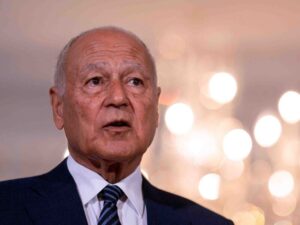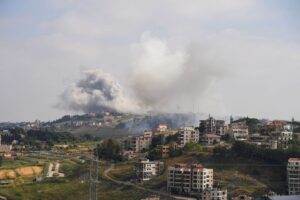

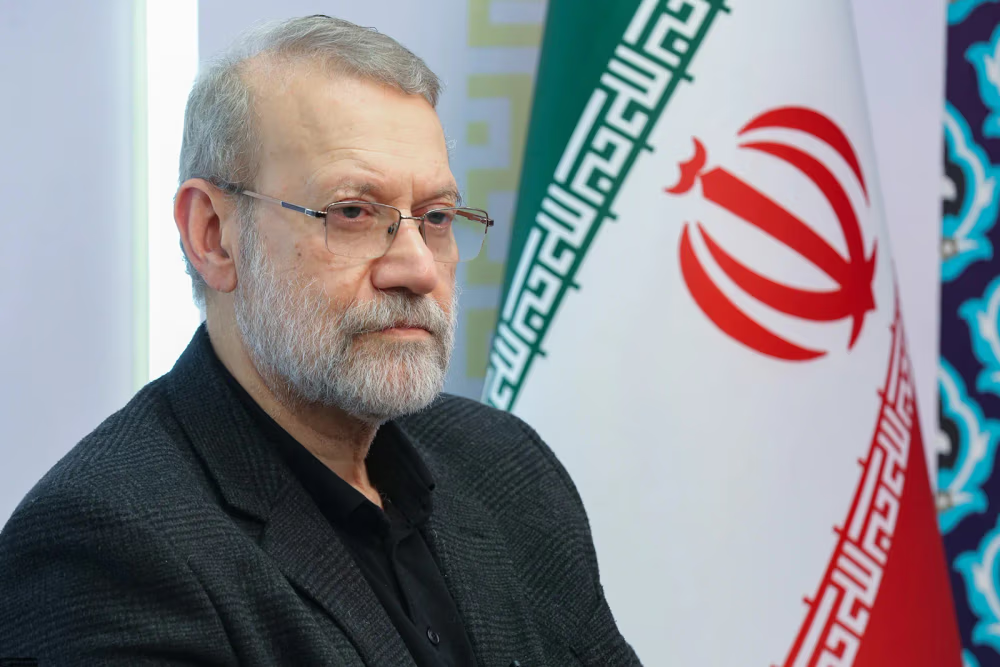
Israel’s Defence Minister Israel Katz said that Ali Larijani, Iran’s top security official, has been killed in a targeted Israeli strike overnight, marking a dramatic escalation in the ongoing conflict between Tehran and Israel.
Katz said he was just informed of Larijani’s death in the operation that also killed Basij commander Gholamreza Soleimani. He praised the pilots and intelligence officials involved and signalled that Israel will continue to pursue senior figures in Iran’s leadership.
“The prime minister and I have instructed the Israel Defense Forces to continue hunting down the leadership of the regime of terror and oppression in Iran,” Katz said in his statement. He added that US President Donald Trump had spoken about the high turnover among Iran’s leadership and that Israel would update him that the turnover “continues and is even increasing following the assassination of two of the most senior remaining leaders.”
The Israeli claim comes amid a wider backdrop of military strikes and counterstrikes in the Middle East. While Iran has not yet issued an official comment confirming Larijani’s death, multiple media outlets have reported on the strike on Iran’s security chief, noting the lack of independent confirmation.
Who Was Ali Larijani?
Ali Larijani was the influential secretary of Iran’s Supreme National Security Council (SNSC), a key institution in Tehran’s national security and foreign policy apparatus.
Larijani was appointed to the position in August 2025 by Iranian President Masoud Pezeshkian and confirmed by the Supreme Leader. Before this role, he served as speaker of Iran’s parliament for 12 years, from 2008 to 2020, and earlier in his career acted as Iran’s chief nuclear negotiator. His experience and long-standing role in Iranian politics made him one of the Islamic Republic’s most significant power brokers.
Larijani was seen in recent years as a conservative pragmatist compared with hardliners, though he held deep influence across Iran’s political establishment. His leadership of the SNSC placed him at the center of strategic decision-making during the current conflict. He was also described in Iranian state media as an adviser to the late Supreme Leader Ayatollah Ali Khamenei.
His brother, Sadegh Larijani, chairs Iran’s Expediency Council, a powerful arbitration body that mediates disputes between the legislative and constitutional watchdog institutions, highlighting the family’s prominence across Iran’s ruling elite.
Why This Matters to Markets
A strike on a senior Iranian official like Larijani comes at a time of extraordinary volatility in regional geopolitics that is already roiling global markets. Brent crude and other oil benchmarks have surged sharply in recent weeks as tensions have mounted, with disruptions to energy infrastructure and fears of prolonged conflict threatening supply from the Middle East. Analysts have noted that any widening of the conflict could exacerbate oil price shocks and inflationary pressures worldwide.
The Strait of Hormuz, through which roughly 20 percent of global oil flows, has been intermittently disrupted, prompting some oil producers to cut output and global benchmarks to climb. In response, major banks such as Bank of America and Standard Chartered have raised their oil price forecasts for 2026, citing supply risks tied to the conflict.
Financial markets have also shown heightened volatility, with equities sliding and safe-haven assets like gold rising amid risk-off sentiment. Investors watch developments closely because continued escalation could push inflation higher, slow economic growth, and force central banks to reconsider monetary policy paths.
With Israel pledging to maintain pressure on Iran’s leadership and Tehran likely to retaliate, most observers expect the geopolitical and economic fallout to continue. While independent verification of Larijani’s death remains outstanding, the claim itself has immediate implications for investor confidence, energy markets, and diplomatic relations across the region.