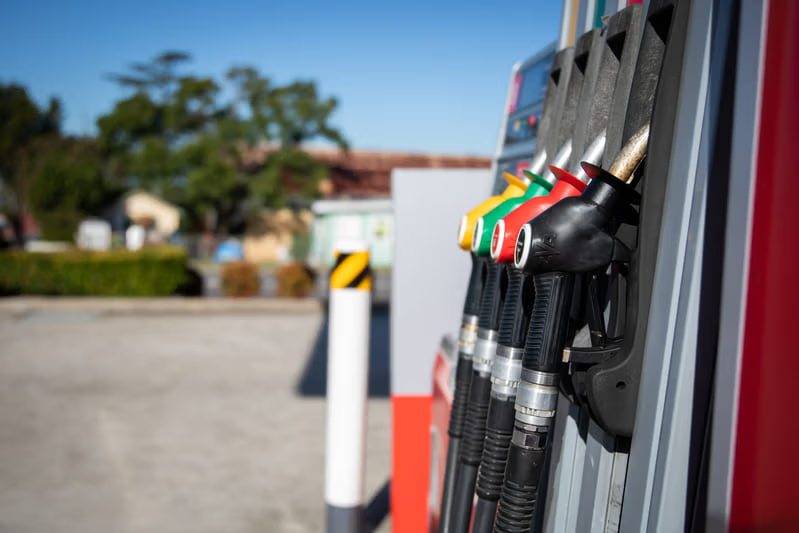
Oil prices fell sharply in early Asian trade on Wednesday after US President Donald Trump said negotiations to end the ongoing conflict are progressing, raising hopes of easing supply disruptions, even as Iranian officials rejected the claims.
Brent crude dropped 6.6% to $97.56 a barrel, while US West Texas Intermediate fell more than 5.5% to $87.20, reversing part of the recent surge driven by escalating tensions in the Middle East.
Trump said discussions to end the war are happening “now” and that those involved “want to make a deal so badly,” adding that Vice President JD Vance and Secretary of State Marco Rubio are engaged in the talks. However, officials in Tehran dismissed reports of any negotiations as “fake news,” accusing the US of attempting to influence market sentiment.
The conflicting narratives come amid continued missile exchanges between Iran and Israel, with strikes reported in Tehran and warnings issued in parts of Lebanon, underscoring the fragile security environment despite talk of diplomacy.
Markets appeared to interpret Trump’s remarks as a signal that worst-case supply disruptions may be less likely, triggering a pullback in oil prices after Brent briefly crossed $100 a barrel earlier this week.
The Strait of Hormuz remains central to the market’s concerns. The narrow waterway handles roughly 20% of global oil and liquefied natural gas flows, and any disruption has immediate global repercussions. Iran’s actions in the region have raised fears of prolonged supply constraints, pushing prices higher in recent sessions.
Analysts said the decline in prices reflects a recalibration of risk, though caution remains. “The drop will only sustain if there is credible follow-through,” including safe passage for shipments through the Gulf, said an expert.
Despite the pullback, oil prices remain elevated compared with pre-conflict levels, and uncertainty continues to dominate the outlook. Industry leaders have warned of broader economic consequences if the crisis persists.
Shell Chief Executive Wael Sawan said supply shortages could begin affecting Europe as early as next month, while BlackRock CEO Larry Fink cautioned that oil prices approaching $150 a barrel could trigger a global recession.
Equity markets in Asia-Pacific rose alongside the drop in oil prices, with Japan’s Nikkei 225 and South Korea’s Kospi each gaining more than 2%, reflecting optimism that easing energy costs could support economic stability.
For now, markets remain highly sensitive to developments in the Middle East, with oil prices likely to fluctuate in response to both geopolitical signals and on-the-ground realities.