

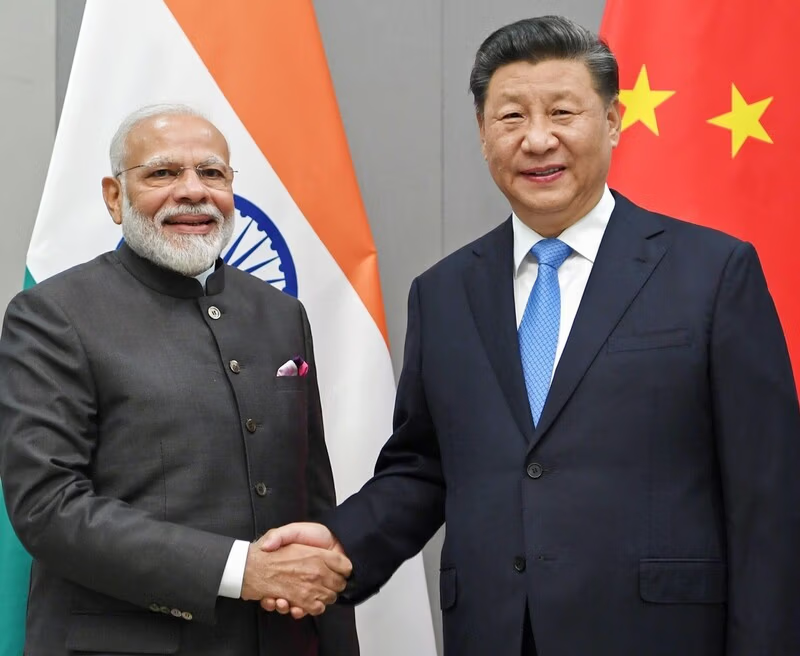
India’s trade deficit with China is set to cross the $100 billion mark for the first time, underscoring the widening imbalance between the two economies and raising concerns over growing import dependence.
The gap has widened sharply in recent years, driven by a surge in imports of electronics, machinery, chemicals, and intermediate goods from China, while India’s exports have grown more slowly.
Data indicates that imports from China have climbed to nearly $120 billion in the current fiscal period, while exports remain significantly lower, resulting in a deficit exceeding $100 billion.
The widening deficit reflects structural factors within India’s economy, where key sectors such as electronics, pharmaceuticals, and renewable energy rely heavily on Chinese components and raw materials. Analysts say this dependence continues to deepen even as India pushes for domestic manufacturing under initiatives like “Make in India.”
China remains one of India’s largest trading partners, with bilateral trade volumes reaching record levels in recent years, further amplifying the imbalance.
The development comes at a time when global supply chains are under stress due to geopolitical tensions, including disruptions in West Asia, which have added to trade and logistics costs.
At the same time, India’s efforts to expand exports to China have faced challenges, including limited market access and a narrow export basket dominated by low-value goods.
Policymakers have increasingly flagged the issue, calling for a more targeted export strategy and greater focus on domestic production to reduce reliance on imports. Measures under consideration include tighter monitoring of import flows, incentives for local manufacturing, and diversification of supply chains.
Despite the concerns, experts note that imports from China also play a critical role in supporting India’s manufacturing ecosystem by providing cost-effective inputs that enhance competitiveness.
The milestone of a $100 billion deficit highlights the complexity of India-China trade ties, where economic interdependence continues to grow even as strategic concerns persist.
Addressing the imbalance is expected to remain a key policy priority, with a combination of export promotion, supply chain diversification, and industrial policy likely to shape India’s response in the coming years.