

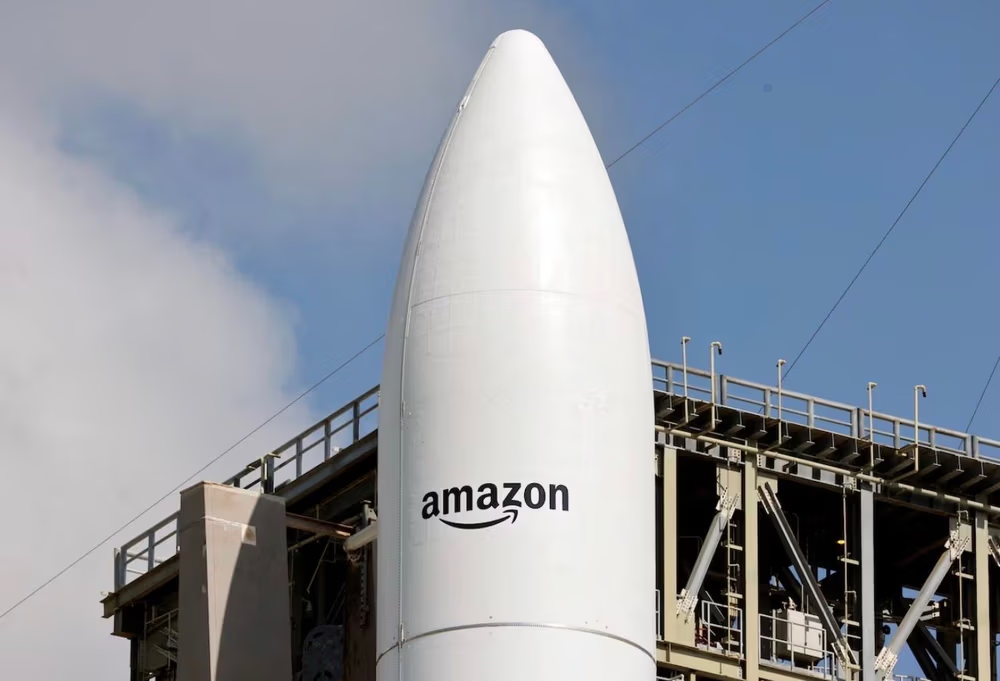
Amazon Globalstar deal marks a major push by Amazon into satellite communications, as the company moves to strengthen its position against Starlink, the fast-growing network operated by SpaceX.
Amazon said it will acquire Globalstar in a transaction valued at approximately $11.57 billion, adding the company’s satellite assets and spectrum capabilities to its existing infrastructure.
The deal comes as competition intensifies in the race to deliver global internet coverage from low Earth orbit, a market that has attracted heavy investment from technology and aerospace companies seeking to tap into demand for connectivity in remote and underserved regions.
Globalstar brings a network of roughly two dozen satellites focused on low-data, direct-to-device communication, a segment gaining importance as companies aim to connect smartphones directly to satellites without relying on traditional cellular towers. The technology is particularly relevant for emergency services and coverage in areas where terrestrial networks are limited.
For Amazon, the acquisition complements its broader satellite initiative, known as Project Kuiper, which aims to deploy more than 3,000 satellites by 2029. The company faces regulatory milestones along the way, including requirements to have a significant portion of its constellation operational within set timelines.
The addition of Globalstar’s capabilities is expected to accelerate Amazon’s ambitions in direct-to-device services, with deployment targeted around 2028. It also strengthens Amazon’s spectrum position, a critical factor in enabling satellite-based communication at scale.
Despite the strategic move, Amazon remains behind Starlink in terms of scale. The SpaceX-backed network already operates a constellation of around 10,000 satellites and serves millions of users globally, giving it a significant first-mover advantage in satellite broadband.
Starlink is also expanding into direct-to-device connectivity through partnerships with telecom operators, further intensifying competition in the sector.
Industry analysts view Amazon’s acquisition as a necessary step to close the gap. By integrating Globalstar’s infrastructure and spectrum assets, Amazon gains a faster path to building out its satellite ecosystem and competing more effectively in next-generation connectivity.
The broader market opportunity remains substantial. Satellite networks are increasingly seen as a complement to traditional telecom infrastructure, particularly as demand grows for always-on connectivity across devices, industries, and geographies.
For Amazon, the deal reflects a longer-term strategy that extends beyond e-commerce and cloud computing, positioning the company in a critical layer of global digital infrastructure.