Cuba is facing one of its worst energy crises in decades after authorities confirmed the island has completely run out of diesel and fuel oil needed to keep its aging power plants operational, triggering widespread blackouts, economic disruption, and growing public unrest.
The announcement by Cuba’s Energy and Mines Ministry marks a dramatic escalation in a crisis that has been building for months as tightening US sanctions and fuel restrictions choke off critical imports to the communist-run nation. Energy Minister Vicente de la O Levy said the country’s electricity system had been left without any fuel reserves, warning that the national grid was operating in a “critical” condition.
Cuba says it is willing to review a $100m US aid proposal as it faces a worsening energy crisis after months of a fuel embargo, with widespread blackouts disrupting daily life and essential services.
— Al Jazeera English (@AJEnglish) May 15, 2026
Al Jazeera’s Lucia Newman reports. pic.twitter.com/X9UVCNt3OJ
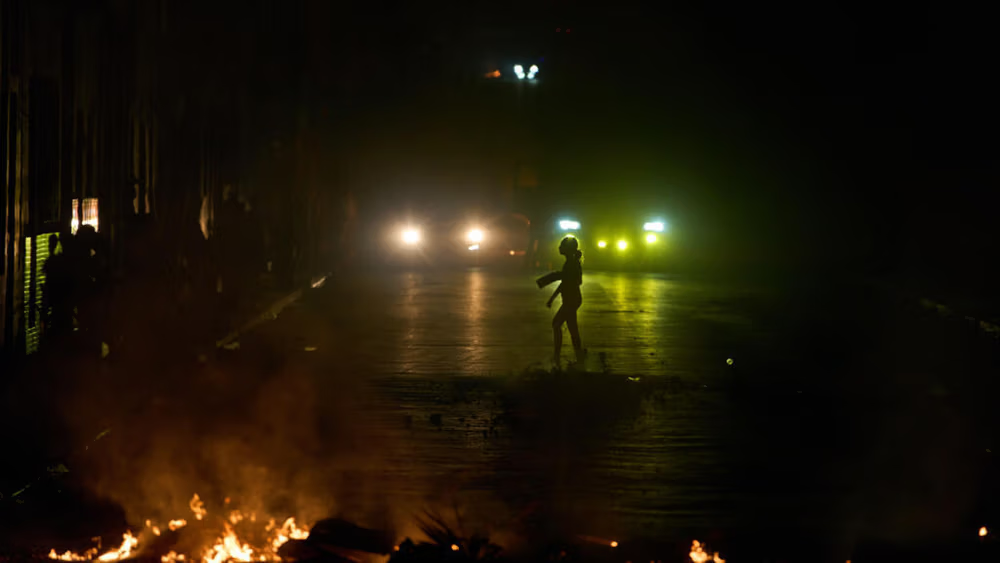
Large parts of the island, including sections of Havana and eastern Cuba, have been experiencing rolling blackouts lasting up to 20 to 22 hours a day. In some areas, the electrical grid has partially collapsed, leaving millions struggling with food spoilage, water shortages, transport disruptions, and failing public services.
The crisis has sparked rare public protests across Havana and other cities, with residents blocking roads, banging pots and pans, and demanding the restoration of electricity amid sweltering summer temperatures. Reports indicate security forces increased monitoring in several protest-hit neighborhoods as frustrations mounted over deteriorating living conditions.
At the centre of the crisis is Cuba’s heavy dependence on imported fuel. The island historically relied on oil shipments from allies such as Venezuela and Mexico, but supplies have sharply declined this year following intensified US sanctions targeting countries and companies supplying fuel to Cuba. The measures, introduced earlier this year under the Trump administration, imposed tariffs and restrictions on entities involved in oil exports to the island, effectively tightening what Cuban officials describe as an energy blockade.
The United Nations has criticized the restrictions, arguing they undermine access to essential services, including food, healthcare, water, and electricity.
Cuba’s domestic oil production currently covers less than half of the country’s daily requirements, while aging infrastructure and a lack of spare parts have further weakened the national power grid. Analysts say years of underinvestment, economic isolation, and declining foreign currency reserves have left the country highly vulnerable to external supply shocks.
The government has increasingly turned to solar power projects, many backed by Chinese investment, to reduce dependence on imported fuel. However, renewable capacity remains insufficient to stabilize the grid, particularly due to limited battery storage and outdated transmission infrastructure.
The broader humanitarian impact is becoming increasingly visible. Schools and universities have been closed, public transport services reduced, waste collection slowed due to fuel shortages, and sections of the tourism sector have suffered operational disruptions. Some international airlines previously suspended flights to Cuba earlier this year amid aviation fuel shortages.
The crisis is also unfolding against a backdrop of heightened geopolitical tensions in the region. Washington has intensified pressure on Havana while simultaneously offering humanitarian assistance through international and religious organizations, moves Cuban authorities have viewed with suspicion.
With fuel reserves depleted and no immediate large-scale supply relief in sight, economists warn Cuba could face prolonged economic paralysis unless external energy supplies resume or emergency international support is secured.