

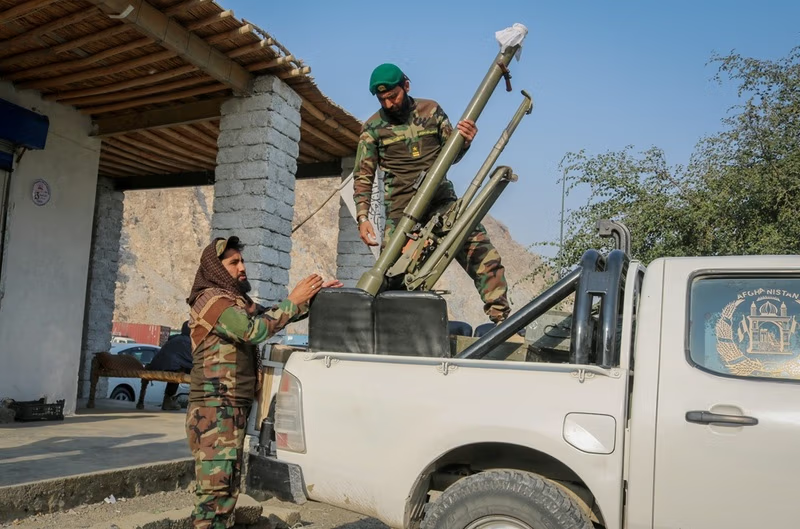
Pakistan bombs Kabul and other major Afghan cities after ceasefire negotiations failed, marking one of the most serious escalations between Pakistan and Afghanistan in recent years. The overnight strikes followed the collapse of talks brokered by Turkey and Qatar, with Islamabad’s defence leadership declaring the situation had reached “open war.”
Explosions were heard across Kabul and Kandahar through the night, with fighter jets reportedly flying overhead until dawn. The bombardment is described as Pakistan’s most extensive operation against the Afghan capital and its first airstrikes targeting the Taliban’s southern stronghold since their return to power in 2021.
The escalation came after Afghan forces allegedly targeted Pakistani border troops late Thursday in retaliation for earlier air operations by Islamabad. Tensions have been building along the frontier for months, with repeated clashes and accusations over militant activity. Border crossings, including the key Torkham route, have remained largely shut since deadly fighting in October that left more than 70 people dead on both sides.
As Pakistan bombs Kabul, Islamabad maintains that the strikes were aimed at dismantling infrastructure used by militant groups accused of carrying out attacks inside Pakistan. Chief among these groups is Tehreek-e-Taliban Pakistan, which has intensified assaults since the Taliban regained control of Kabul. The Taliban government denies providing sanctuary to armed groups targeting Pakistan.
Pakistan’s Defence Minister Khawaja Asif described the confrontation as an “all-out” conflict, stating publicly that it was now “open war.” The remarks signal a hardened position from Islamabad and underscore the seriousness of the military escalation.
Afghan authorities confirmed the strikes but disputed elements of Pakistan’s account. While Taliban officials said there were no casualties in Kabul, Afghanistan’s defence ministry reported fatalities among its forces during ground fighting near the border. Civilian injuries were also reported at a camp housing Afghan returnees near Torkham after shelling struck the area overnight.
Both militaries have issued competing claims about losses and battlefield developments, reflecting the fast-moving and contested nature of the conflict. The United Nations has previously reported civilian casualties from earlier cross-border strikes, adding to humanitarian concerns.
Regional powers are closely monitoring the crisis. Saudi Arabia recently mediated the release of captured Pakistani soldiers, Iran has offered to facilitate dialogue, and China has called for restraint while engaging both governments diplomatically. Despite these efforts, ceasefire attempts brokered by Turkey and Qatar have failed to deliver a lasting agreement.
The conflict unfolds against a wider backdrop of instability in the region, including a rise in militant attacks in both countries. Groups such as Islamic State Khorasan have claimed responsibility for high-profile bombings in recent months, further complicating the security environment.
As Pakistan bombs Kabul and tensions escalate, the risk of a prolonged confrontation looms. With diplomatic efforts struggling and rhetoric intensifying, the coming days will be critical in determining whether mediation can restore stability or whether the crisis deepens into sustained hostilities between the two neighbours.