
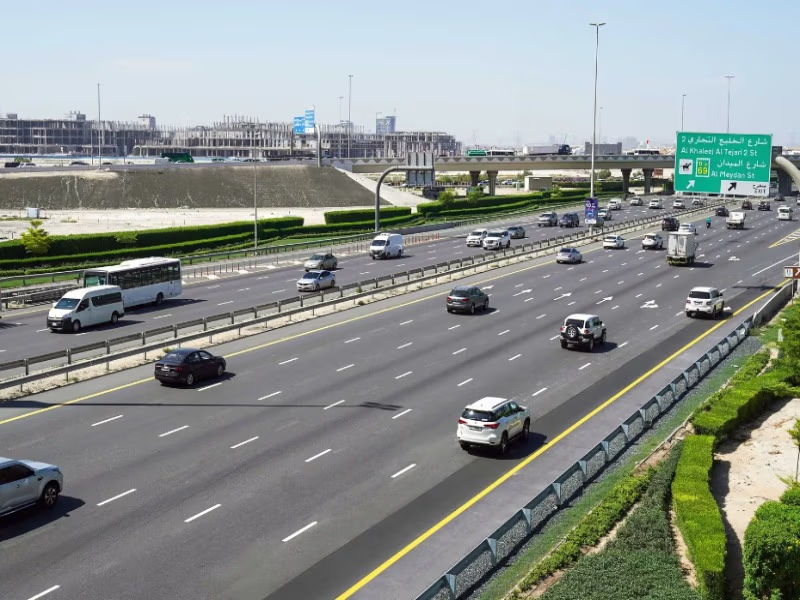
Dubai’s Roads and Transport Authority (RTA) has embarked on the implementation of a set of quick traffic interventions at eight strategic locations in the emirate, which are part of a larger 2026 mobility enhancement program that includes more than 45 traffic improvement initiatives.
The programme aims to optimize road network performance, improve traffic flow, and raise standards of safety as a result of long-term urban growth, population increase, and rising vehicle density in Dubai.
RTA media statement indicated that the targeted works span critical corridors, including Emirates Road from Sharjah towards Wadi Al Amardi Street; Umm Amara Street connecting Sheikh Zayed Road to Al Wasl Street; Jebel Ali–Lehbab Street; the vicinity between Sama Al Jaddaf and Al Jaddaf Waterfront near Al Jaddaf Metro Station; Al Na’ayat Street in Al Barsha 1; the area surrounding Al Maktoum School in Al Satwa; the intersection of Al Ittihad Street and Al Quds Street; and Sheikh Rashid Street near Grand Hyatt Dubai towards Bur Dubai.
The projects are expected to provide measurable performance improvements throughout the targeted zones. RTA estimates a decline in the level of congestion and journey time by a factor of between 15 percent and 30 percent.
These advancements are expected to bolster operational efficiency on key transport corridors, increase daily mobility of residents and visitors, and contribute to economic activity by mitigating delays in high-traffic areas.
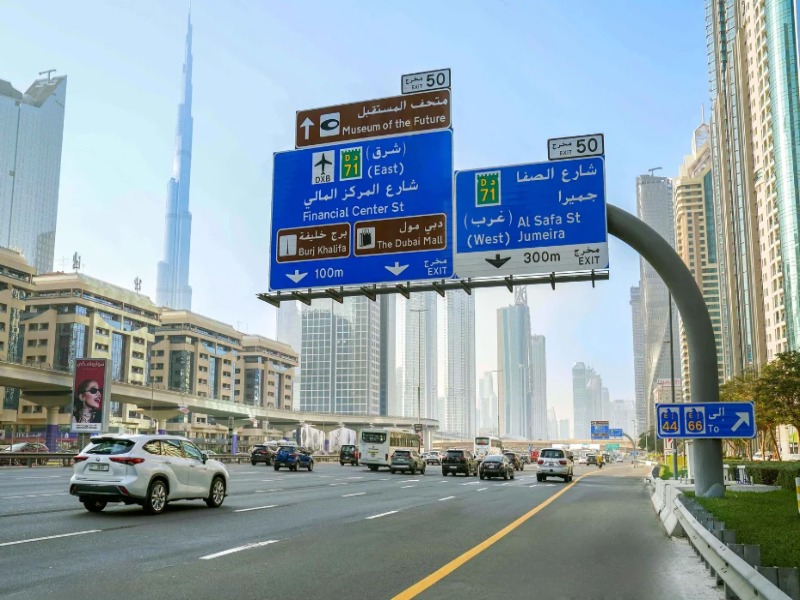
The scope of works is the widening of selected roads to dual lanes, the conversion of roundabouts into signalized intersections, and the construction of new links to enhance connectivity between arterial routes and neighboring residential and commercial communities. Improvements of at-grade junctions are included in the package as well.
Besides this, the authority is also rolling out additional parking spaces in schools and high-demand areas, and a whole package of traffic safety improvements that will enhance the safety of road users and ensure smoother vehicular movement.
The RTA uses a data-driven and systematic approach in the implementation of traffic improvement programs. Network performance monitoring, intensive traffic analytics, and advanced data analytics are continuously implemented to detect congestion hotspots and prioritize interventions.
Traffic control centres provide real-time monitoring to identify bottlenecks early, whereas field inspection teams offer on-site reviews to suggest specific engineering solutions.
This combined strategy is aimed at generating long-term growth in the smooth flow of traffic during peak hours and long-term resilience of the network.