
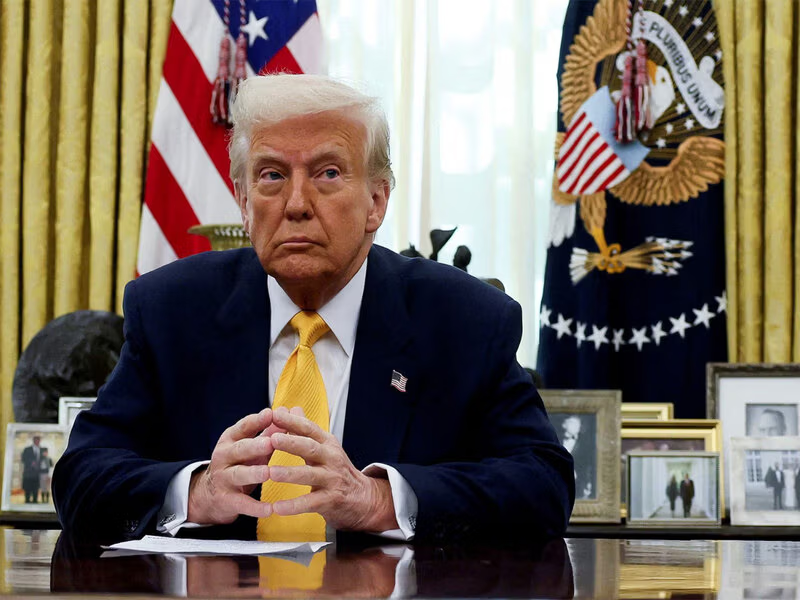
Trump’s Iran ceasefire stance has taken a firmer turn, with Donald Trump indicating that the United States is not considering extending the current truce with Iran, favoring instead a more comprehensive agreement to resolve the conflict.
Speaking amid ongoing tensions in the Middle East, Trump suggested that a temporary extension of the ceasefire would not be necessary if negotiations could produce a longer-term solution. His remarks come at a time when diplomatic efforts have struggled to gain traction following the breakdown of recent talks.
The ceasefire, initially put in place to create space for negotiations, now faces uncertainty as both sides reassess their positions. The failure of high-level discussions over the weekend has raised doubts about the prospects for a near-term agreement, even as diplomatic channels remain open.
Trump’s position reflects a shift toward prioritizing a broader settlement that addresses core issues, including security concerns and regional stability, rather than relying on short-term de-escalation measures. The approach suggests a willingness to accept near-term risks in pursuit of a more durable outcome.
The developments come against the backdrop of heightened geopolitical tensions that have already begun to impact global markets, particularly energy supply routes and shipping lanes linked to the Strait of Hormuz. Any further escalation could have significant implications for oil prices and international trade flows.
While the U.S. administration has not ruled out continued engagement with Iran, the emphasis appears to be on securing a definitive agreement rather than prolonging interim arrangements. That stance introduces a degree of uncertainty, as the absence of a ceasefire extension could increase the risk of renewed confrontation.
For global markets and policymakers, the situation underscores the fragile balance between diplomacy and escalation, with the next phase of negotiations likely to determine whether tensions ease or intensify in the weeks ahead.