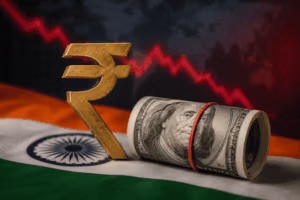

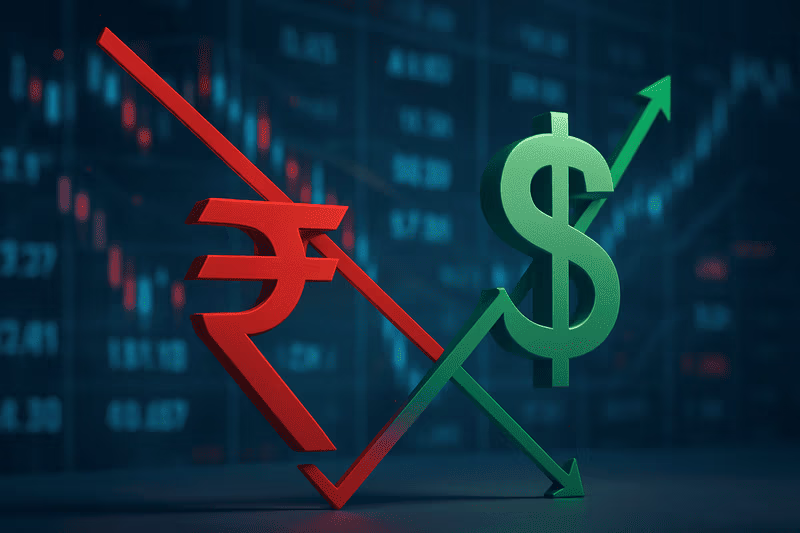
The Indian rupee has become the most undervalued it has been in nearly 12 years, according to recent market estimates, but economists warn the weaker currency may not significantly improve India’s export competitiveness amid slowing global demand and structural trade challenges.
The rupee has faced sustained pressure in recent months due to rising crude oil prices, widening trade deficit concerns, foreign investor outflows, and a stronger US dollar.
Analysts said the currency’s undervaluation reflects both external global pressures and domestic macroeconomic concerns, particularly India’s dependence on imports such as crude oil, electronics, and industrial components.
Traditionally, a weaker rupee tends to support exports by making Indian goods cheaper in international markets. However, economists believe the current environment may limit those benefits.
Global demand remains subdued across several major economies, while sectors such as textiles, engineering goods, and manufacturing continue facing slower order flows from Europe and other export markets.
In addition, many Indian exporters rely heavily on imported raw materials and components, meaning the benefits of a weaker currency can be offset by rising import costs.
Analysts also pointed out that India’s growing services exports, particularly in information technology and digital services, are less directly affected by currency movements than traditional merchandise exports.
The weaker rupee has simultaneously raised concerns around imported inflation, especially as higher crude oil prices increase fuel and transportation costs across the economy.
Market participants are closely monitoring the rupee’s trajectory amid continued geopolitical tensions, rising global bond yields, and expectations surrounding US Federal Reserve interest rate policy.
Economists said long-term export competitiveness would depend more on manufacturing efficiency, supply chain resilience, infrastructure, and trade diversification rather than currency weakness alone.