
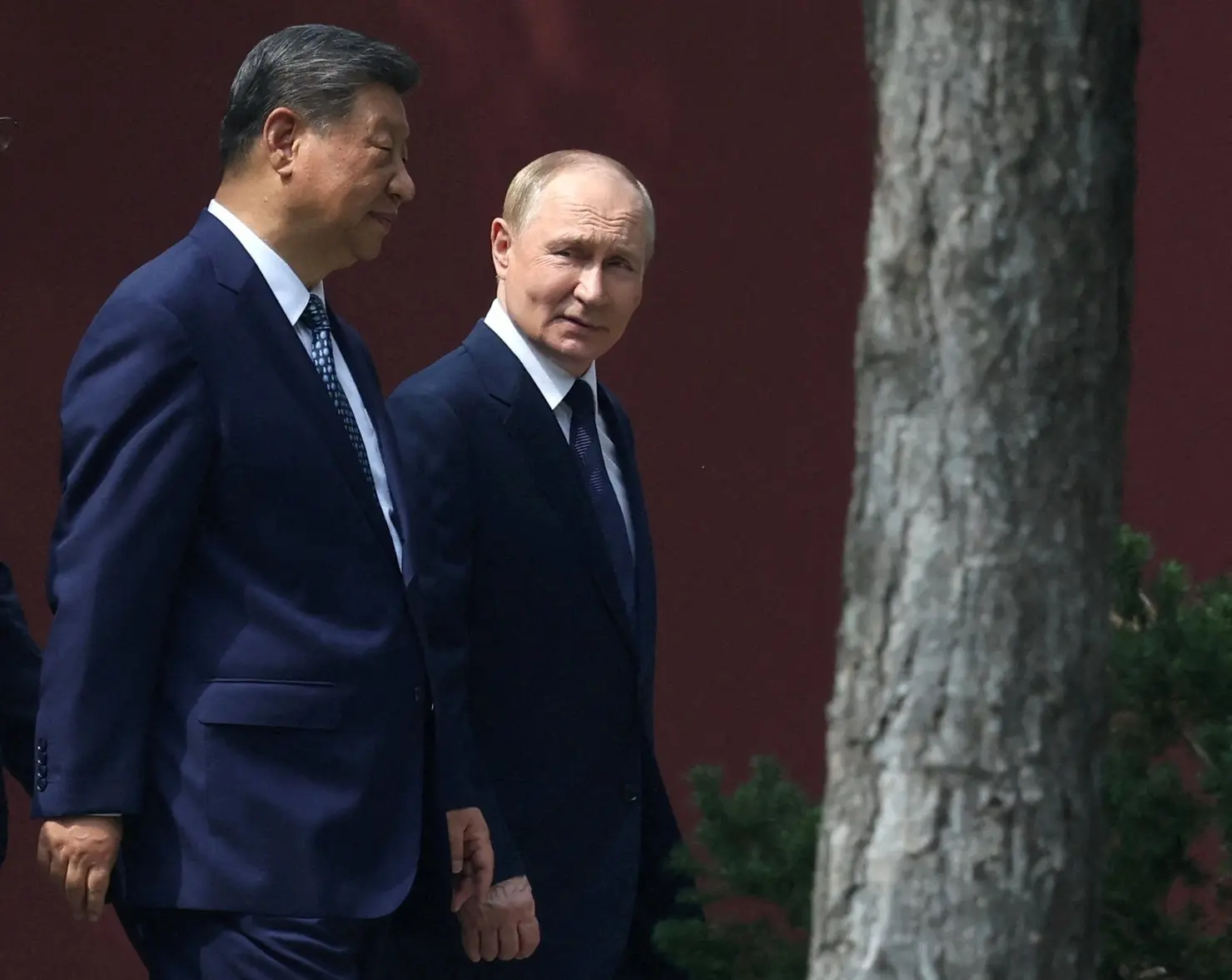
Vladimir Putin began a high-profile visit to Beijing on Tuesday for talks with Xi Jinping centered on energy cooperation, the Ukraine conflict, and strengthening strategic ties between the two countries.
The meeting comes at a significant geopolitical moment, arriving just days after Xi hosted Donald Trump in China, highlighting Beijing’s increasingly central role in global diplomacy and power politics.
Analysts said the visit further reinforces China’s growing influence as world leaders increasingly travel to Beijing for strategic negotiations amid shifting geopolitical alignments.
Energy cooperation is expected to be a key focus of discussions, particularly regarding a long-delayed gas pipeline project that Moscow hopes will gain renewed urgency amid uncertainty in global energy markets stemming from the Iran conflict and broader geopolitical instability.
Russia has increasingly pivoted toward China for energy exports and economic cooperation following Western sanctions imposed after the Ukraine war.
The two countries have significantly expanded trade in recent years, with bilateral trade surpassing $200 billion and a growing share of transactions now settled in yuan and rubles rather than US dollars.
The conflict in Ukraine is also expected to feature prominently during the talks.
According to reports, Xi recently indicated to Trump that Putin may eventually regret the prolonged war in Ukraine, highlighting Beijing’s increasingly delicate diplomatic balancing act between maintaining strategic ties with Moscow and managing relations with Western economies.
Despite deepening cooperation, analysts note that the Russia-China relationship has become increasingly asymmetrical, with Moscow growing more economically dependent on Beijing amid sanctions and reduced access to Western markets.
The visit is expected to result in further discussions on energy infrastructure, trade expansion, geopolitical coordination, and regional security issues.