

Source : WAM
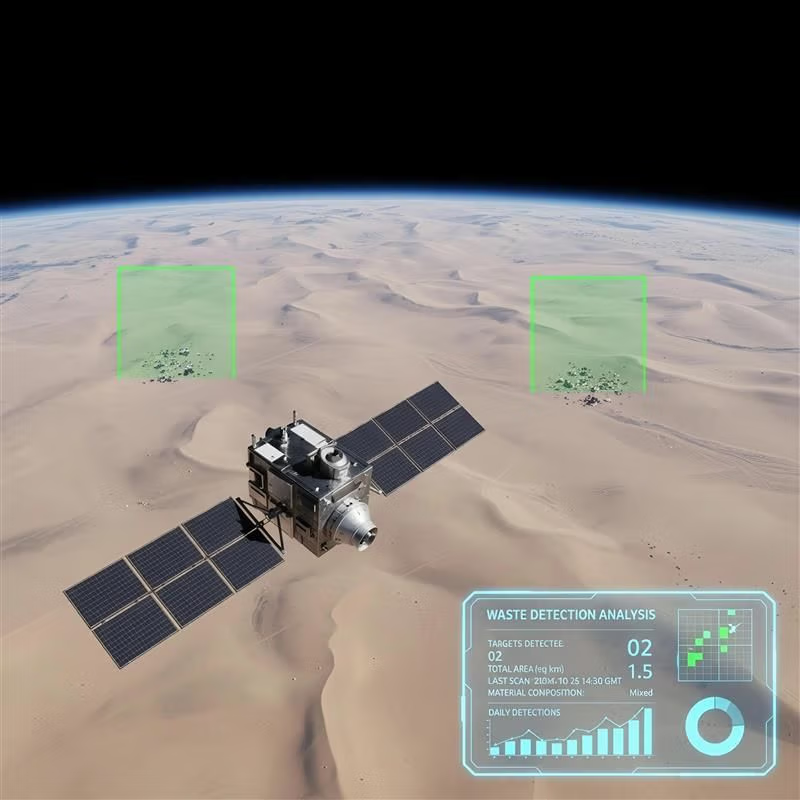
In a significant advancement that reshapes the concept of environmental monitoring, Environment Agency – Abu Dhabi (EAD) has launched a pioneering pilot project that uses artificial intelligence and satellite imagery to detect and monitor random waste dumping sites across the emirate. The initiative aims to improve the efficiency of waste management systems and strengthen the effectiveness of environmental oversight.
The project is the first of its kind in the UAE to apply AI models and satellite image analysis within the waste management sector, marking a strategic transition from conventional monitoring methods to an intelligent system capable of automated data analysis and the prediction of potential violations.
Dr. Shaikha Salem Al Dhaheri, Secretary-General of EAD, said, “This project embodies the agency’s commitment to the transformation towards a smart and sustainable environment, in line with the UAE Strategy for Artificial Intelligence 2031 to enhance government performance and the sustainability of vital sectors. The project also reflects the pillar of A Green Innovation, Science and Technology, one of the main pillars of the Abu Dhabi Environmental Centennial 2071, enabling us to anticipate environmental challenges, improve environmental quality, and promote long-term sustainability through digital innovation and artificial intelligence.”
Once expanded, the project is expected to significantly enhance proactive monitoring of environmental violations by leveraging intelligent satellite image analysis and predictive models to identify potential illegal dumping sites, allowing early intervention before environmental damage escalates.
The initiative will also help increase the efficiency of the waste management system, strengthen coordination and governance among government entities, and raise public satisfaction by reducing illegal dumping and improving the overall environmental landscape.
Engineer Faisal Al Hammadi, Executive Director of the Environmental Quality Sector at EAD, said, “The implementation of the pilot project in Al Bukariyah in the Al Ain Region reflects the agency’s commitment to transitioning towards innovative solutions based on artificial intelligence and modern technologies to enhance environmental monitoring. The project results demonstrated an accuracy exceeding 90 per cent in detecting illegal dumping sites, and the system was able to identify 150 waste sites compared to only 43 sites discovered through field monitoring during the same period. This confirms the efficiency of technological innovation and artificial intelligence and its ability to accelerate detection processes and improve the accuracy of environmental monitoring.
“The project also enabled the classification of waste with high accuracy and the study of changes in the areas of monitored sites compared to previous years, which enhances the agency’s ability to track the origin of waste and its duration, and to develop effective strategies to reduce environmental violations and improve the overall quality of the environment.”
Following the identification of dumping sites, EAD coordinated closely with relevant authorities to remove the waste and rehabilitate affected areas, ensuring rapid response and remediation. The agency continues to monitor these sites after clean-up to prevent recurrence and support long-term environmental protection.
The project will further enhance EAD’s legislative and regulatory role in environmental oversight by employing smart digital tools based on satellite imagery and geographic data analysis, contributing to environmental protection, natural resource sustainability, and reduced risks to human health across the emirate.
EAD showcased the project’s outcomes and experience at the International Solid Waste Association World Conference (ISWA 2025) in Argentina, where it received positive recognition from experts and participants, underscoring Abu Dhabi’s leadership in developing innovative solutions to strengthen environmental monitoring systems.
Building on the success of the pilot phase, the agency plans to expand the project across the entire emirate in the next phase through the establishment of a central smart environmental monitoring platform powered by AI and satellite data analysis, supporting greater government integration and advancing Abu Dhabi’s sustainability and smart governance objectives.