
Dubai has unveiled a broad economic support package and reform agenda, with H.H. Hamdan bin Mohammed bin Rashid Al Maktoum approving AED1 billion in incentives to ease business costs, strengthen investor confidence, and sustain growth momentum across key sectors.
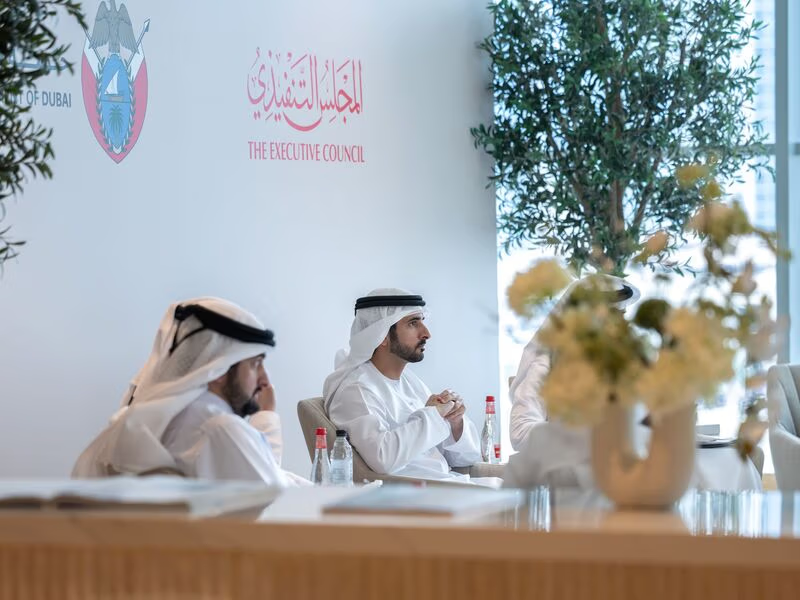
The measures were endorsed during a meeting of the Dubai Executive Council, reflecting a coordinated push to reinforce the emirate’s economic resilience while advancing long-term development priorities.
The stimulus package, set to be rolled out between April and September 2026, is designed to provide immediate liquidity support to businesses and individuals. Key provisions include the deferral of government fees for up to three months, with hotels permitted to postpone payment of sales-related charges and the Tourism Dirham, a move expected to bolster cash flow in the hospitality sector. Customs-related grace periods will also be extended, allowing businesses greater flexibility in managing trade-related obligations.
The initiative comes against the backdrop of steady economic expansion. Dubai reported 6.4 percent growth in the fourth quarter of 2025, while full-year GDP rose 5.4 percent to reach AED937 billion, underscoring the emirate’s continued recovery and diversification efforts.
Alongside the stimulus, the Council approved an updated methodology for measuring GDP to enhance statistical accuracy and capture a broader range of economic activity. The revised framework expands survey coverage and introduces more comprehensive data systems, aligning economic measurement with the evolving structure of Dubai’s economy.
A key structural reform approved at the meeting is the Virtual Warehouses Initiative, overseen by Dubai Customs. The program is designed to streamline temporary imports, particularly high-value goods such as artwork, by exempting them from customs duties and financial guarantees under specific conditions. By streamlining processes and enabling advanced digital tracking, the initiative is expected to strengthen Dubai’s position as a global hub for trade, logistics, and cultural assets.
On the social front, the Council endorsed the Dubai Empowerment Strategy, which seeks to enhance financial stability, employment opportunities, and social cohesion among Emirati families. The strategy builds on earlier programs that have supported more than 1,200 young Emiratis and created over 7,000 jobs, while expanding collaboration between government entities and private-sector partners.
Further reinforcing its focus on inclusive growth, Dubai also approved a Health and Safety Strategy for Workers’ Accommodation, aiming to achieve full compliance with regulatory standards and universal access to essential services by 2033. The initiative aligns with international benchmarks and supports the broader objectives of the Dubai 2040 Urban Master Plan.
In comments during the meeting, Sheikh Hamdan emphasised that the measures reflect Dubai’s commitment to supporting businesses, families, and the wider community, while maintaining its reputation as a transparent and investor-friendly global city.
The package signals a calibrated approach to economic management, combining short-term relief with structural reforms to sustain long-term competitiveness as Dubai continues to position itself as a leading global business and lifestyle destination.
–Input WAM